


250 Years of Public Finance in America
Stories of how Americans funded and Built the Nation

Colonial Road Orders and Required Labor
How did early Colonists pay for roads when cash was scarce? Learn More.
A colonial road was not just a strip of dirt. It connected farms to markets, families to churches, residents to courts, producers to mills, and settlements to ports and ferries. Before modern tax systems and highway departments, local courts or officials often laid out roads, appointed overseers, and required nearby residents to help maintain them. In many places, the payment looked less like a bill and more like a workday: bring tools, carts, teams, and labor to keep the road passable. [1]
This was public finance in a cash-poor economy. Coins, commodity payments, local notes, and credit all existed, but money was scarce and unevenly distributed. Required labor converted household time, animals, tools, and lost work at home into a public improvement. It did not require a large treasury, but it did require public authority: someone had to decide where the road went, who worked on it, how much labor was owed, and what happened if people refused.
Virginia road order records make the system concrete. They named road crews, overseers, landmarks, ferries, bridges, plantations, farms, and the people assigned to maintain specific sections. Those details show the real cost of infrastructure. A road was paid for not only in money, but in hours, tools, wagons, animals, and local enforcement. [2]
The benefits were broad, but not equal. A better road could raise land values, reduce travel time, help farmers reach markets, make courts more accessible, and support military or postal movement. But the burden could fall more heavily on people living near the route or households with fewer tools and less flexibility. In many regions, unequal legal status and enslaved labor were also part of the broader economy. The system solved a practical problem, but it should not be romanticized. [3]
The modern comparison is straightforward. Today, roads may be funded through fuel taxes, tolls, vehicle fees, local sales taxes, state grants, federal aid, or bonds. Colonial governments often used labor duties. The tools changed, but the basic public question did not: transportation networks cost real resources, and someone has to contribute.
Road orders also show why roads are never neutral lines on a map. A route could help one farm and bypass another. It could make one town more important and weaken an older path. Because the same residents who benefited from roads could also be ordered to work on them, the finance decision was visible and personal.
The road-order system was rough, local, and unequal, but it made one point clear: infrastructure has always required real contributions. In the colonial period, the contribution might be a day of labor instead of a fuel tax or bond payment.
Fiscal Facts
- Colonial roads were often maintained through required labor, not cash taxes alone. [1]
- Local courts or officials could appoint road overseers and assign residents to work specific routes. [1]
- Roads connected farms, mills, churches, courts, ports, ferries, and markets. [2]
- The payment burden could be uneven because labor duties depended on location, tools, teams, and local authority.
References
[1] Virginia Transportation Research Council / TRID, Orange County Road Orders, 1734-1749: https://trid.trb.org/View/878660
[2] Maryland State Highway Administration, Colonial and Early National Transportation, 1700-1800: https://www.roads.maryland.gov/OPPEN/II-Colon.pdf
[3] Library Company of Philadelphia, Defining the Role of Public Highways in Early Pennsylvania: https://librarycompany.org/Economics/PDF%20Files/Kaja.pdf

 Loss Transition Modeling Calculator 2">
 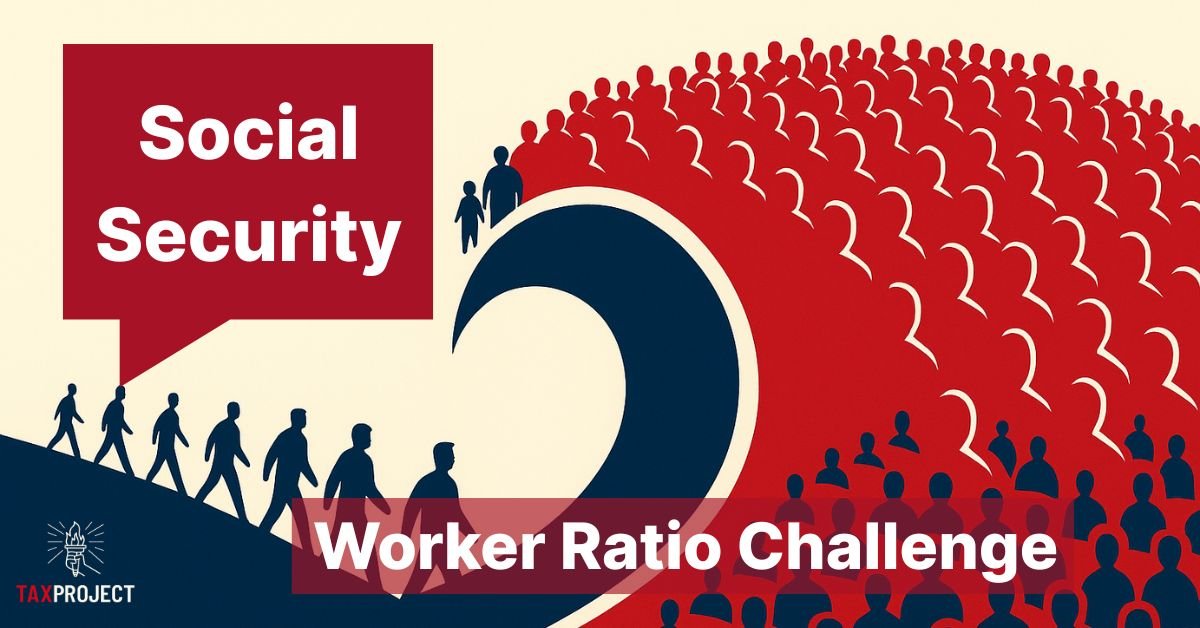 Security: Why Worker Ratios matter? 3">

 Budget Process" style="aspect-ratio: 1024 / 1024; height:auto;" title="Federal Budget Process 6">
  National Debt" style="aspect-ratio: 1024 / 1024; height:auto;" title="The National Debt: Explained 7">
  Freedom Day" srcset="https://taxproject.org/wp-content/uploads/2024/02/tax-freedom-2-1080x675.jpg 1080w, https://taxproject.org/wp-content/uploads/2024/02/tax-freedom-2-300x187.jpg 300w, https://taxproject.org/wp-content/uploads/2024/02/tax-freedom-2-400x250.jpg 400w" sizes="(max-width: 1080px) 100vw, 1080px" style="aspect-ratio: 2560 / 1594; height:auto;" title="When does your Clock Stop Ticking for
