
250 Years of Public Finance in America
Stories of how Americans funded and Built the Nation
Continental Currency and Inflation
Why Revolutionary paper money kept the war going but became a warning about trusting fiat money.
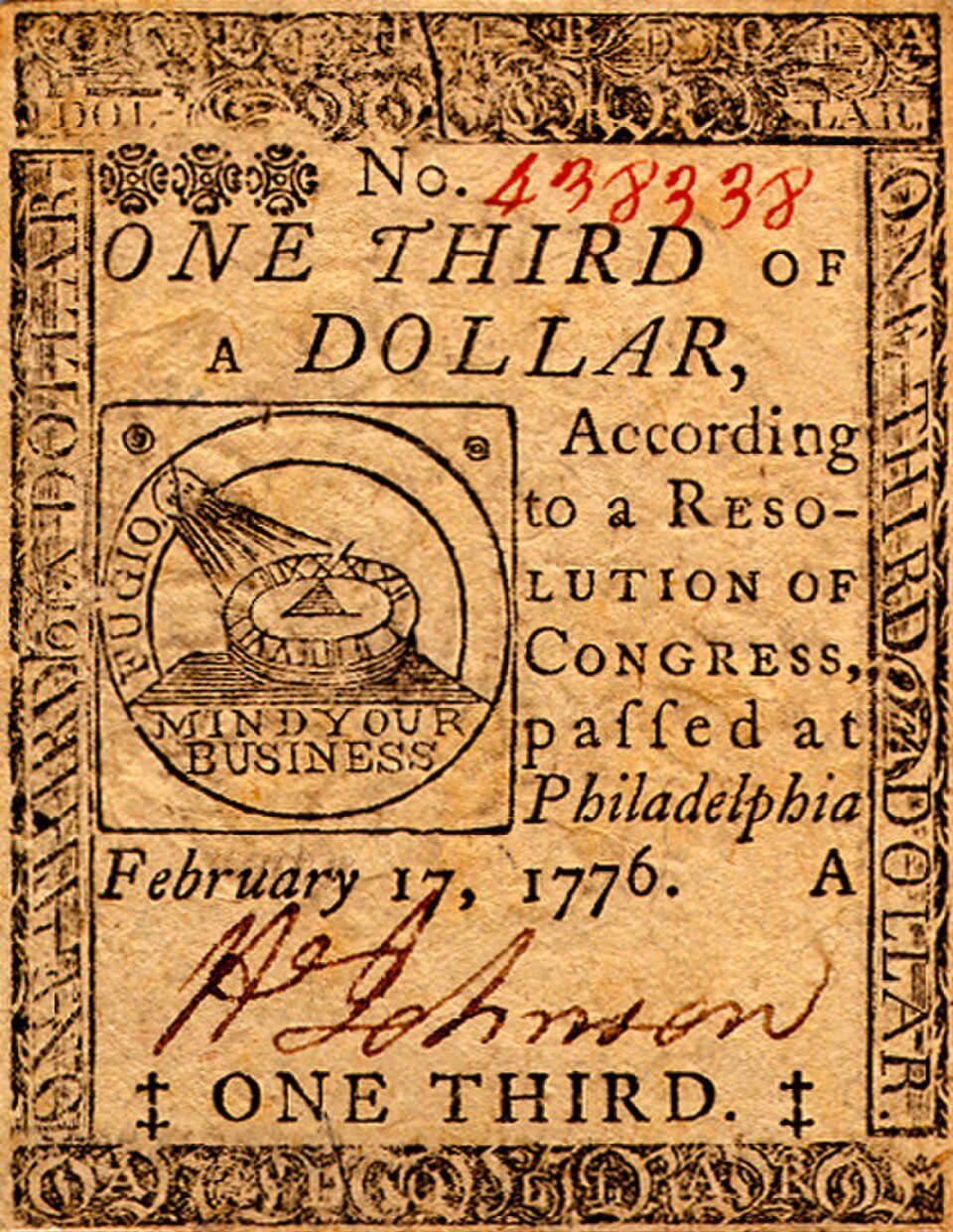
The phrase ‘not worth a Continental’ survived because the Revolution’s money problem touched everyday life. Continental currency was paper money issued by the Continental Congress to help pay for independence. Congress needed soldiers, food, weapons, wagons, clothing, ships, and supplies, but it did not have a reliable national tax system. Paper money became one of the fastest ways to buy time. It helped turn a rebellion into a sustained war effort, but it also showed the danger of issuing money faster than public trust can support it.
Congress began issuing Continental bills in 1775. Over the war, more than $200 million in Continental currency was issued. The bills were backed mainly by the hope that future state or national revenues would redeem them. That backing was weak because Congress could request money from the states but could not reliably force collection. The value of the notes depended heavily on confidence, and confidence became harder to maintain as the war dragged on. In fact, the outcome of the war was not at all clear. [1]
Inflation did not come from one cause alone. The volume of paper money grew. State currencies also circulated. The British intentionally counterfeited currency to undermine trust. Military setbacks affected confidence. Supplies were scarce. Tax systems were weak. Sellers demanded more paper because they worried the notes would lose value before they could spend them. A very early sign that Colonists knew about inflation and the detrimental effects.
Continental currency still served a purpose. It helped pay troops, buy supplies, and keep government operating when few alternatives existed. In that sense, it was not simply a failure. It was an emergency tool used by a government that had not yet built the revenue system needed to support it. The problem was not paper money by itself. The problem was paper money without a sure and steady way to raise revenue, borrowing power, enforcement, and public confidence behind it.
The human cost was real. A supplier who accepted Continental currency in one month might find that the same notes bought less goods and services a few months later. A soldier paid in paper could see their savings lose value. A shopkeeper might raise prices because replacement goods were hard to get and the money itself was uncertain. Inflation was not just a statistic; it was a daily fact of life and that changed the trust relationship between people and the currency.
The lasting result was institutional. Americans learned that a national government needed dependable revenue behind its promises. The experience helped shape later constitutional powers over taxes, borrowing, coinage, commerce, and appropriations. Continental currency kept the Revolution moving, but its collapse left a warning: paper money can buy time, but money needs trust, revenue, and a credible government behind it. The proper management by the Government to maintain stable pricing, and the value of currency to tame inflation would be an important and recurring lesson for the young Nation.
Fiscal Facts
- Congress began issuing Continental currency in 1775 and eventually issued more than $200 million. [1]
- The currency helped fund soldiers and supplies before a reliable national tax system existed. [1]
- Depreciation shifted part of the war cost onto soldiers, suppliers, creditors, and households paid in paper.
- The experience influenced later debates over national taxing, borrowing, and money powers. [3]
References
[1] Federal Reserve Bank of San Francisco, Independence and Continental Currency: https://www.frbsf.org/independence/
[2] Massachusetts Historical Society, United States Continental Paper Currency, 1775-1779: https://www.masshist.org/collection-guides/view/fao0005
[3] Farley Grubb, The Continental Dollar: How Much Was Really Issued?: https://www.nber.org/system/files/working_papers/w13047/w13047.pdf