


250 Years of Public Finance in America
Stories of how Americans funded and Built the Nation
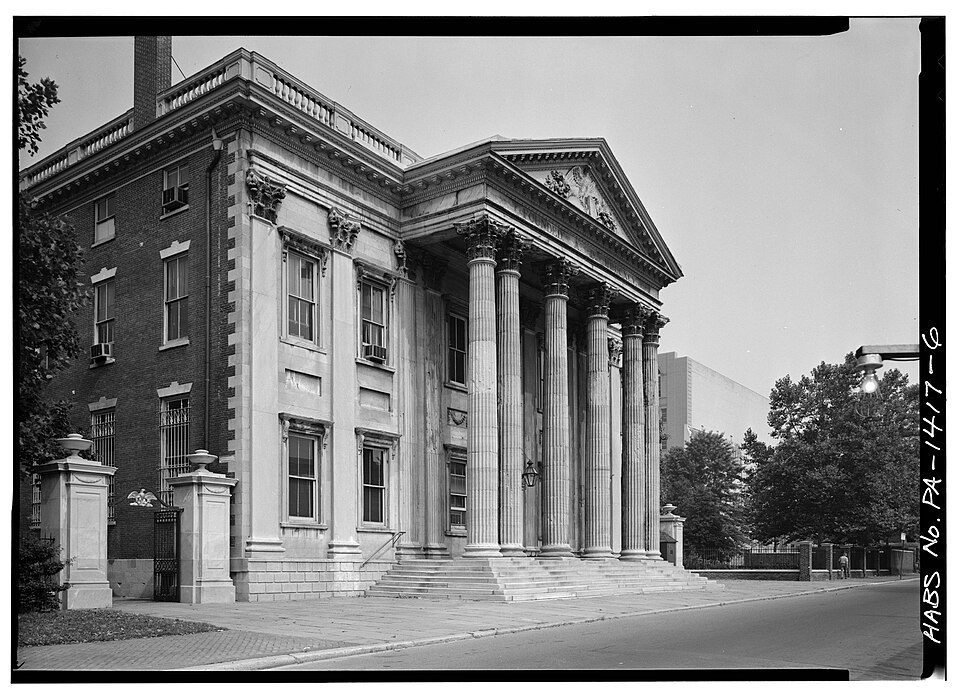
The First Bank of US and Early Finance
Why the First Bank of the United States mattered so much to a New Nation.
A new country needs more than laws. It needs ways to collect money, hold deposits, make payments, manage debt, and support credit, in short it needs Public Finance. That is why the First Bank of the United States became one of the most important finance institutions of the early republic. Chartered in 1791, it was not exactly like the Federal Reserve today but also not simply a regular private bank. It was a mixed public-private institution designed to help the federal government operate and support the young nation’s financial system. [1]
The numbers show its scale. The First Bank opened with $10 million in capital. The federal government subscribed $2 million, while private investors subscribed $8 million. At the time, that made it the largest financial institution and one of the largest corporations in the country. For a young nation still building trust after the Revolution, that capital structure combined public purpose with private investment. [1]
The bank helped the government in practical ways. It could hold federal deposits, move money, make payments, assist with debt management, issue banknotes, and make loans. In an economy where money and banking were uneven across states, a national bank helped create a more connected financial system. It supported the Treasury’s effort to make federal promises more credible. [2]
The bank was controversial from the start. Supporters saw it as necessary financial infrastructure. Critics saw it as an unconstitutional concentration of power and a benefit to financial elites. That debate matters because financial tools often shape authority, markets, and who gains from public support.
The bank’s 20-year charter expired in 1811. One year later, the United States entered the War of 1812 and again faced finance problems. The absence of a national bank made wartime borrowing and payments more difficult, and a Second Bank of the United States was chartered in 1816. That sequence reinforced the original point: financial infrastructure matters most when a government is under stress. [3]
The First Bank’s lesson is straightforward. A treasury, bank, payment system, and market for government debt can be as important as roads or canals. Ledgers, deposits, payments, and credit helped the federal government turn constitutional authority into everyday operations.
Fiscal Facts
- The First Bank of the United States was chartered in 1791. [1]
- It opened with $10 million in capital: $2 million subscribed by the federal government and $8 million by private investors. [1]
- The bank handled deposits, payments, notes, loans, and debt-related operations.
- Its 20-year charter expired in 1811, just before the War of 1812 exposed federal finance weaknesses. [1]
References
[1] Federal Reserve History, The First Bank of the United States: https://www.federalreservehistory.org/essays/first-bank-of-the-us
[2] Federal Reserve Bank of Minneapolis, The Bank that Hamilton Built: https://www.minneapolisfed.org/article/2007/the-bank-that-hamilton-built
[3] Library of Congress, First Bank of the United States resources: https://www.loc.gov/item/today-in-history/february-25/
 Citizen" srcset="https://taxproject.org/wp-content/uploads/2026/09/Office-of-Citizen-980x735.png 980w, https://taxproject.org/wp-content/uploads/2026/09/Office-of-Citizen-480x360.png 480w" sizes="(min-width: 0px) and (max-width: 480px) 480px, (min-width: 481px) and (max-width: 980px) 980px, (min-width: 981px) 1080px, 100vw" style="aspect-ratio: 1448 / 1086; height:auto;" title="Citizen: The Most Important Office 1">
  Equality" srcset="https://taxproject.org/wp-content/uploads/2026/07/Growth-Act-Feature-1-980x513.png 980w, https://taxproject.org/wp-content/uploads/2026/07/Growth-Act-Feature-1-480x251.png 480w" sizes="(min-width: 0px) and (max-width: 480px) 480px, (min-width: 481px) and (max-width: 980px) 980px, (min-width: 981px) 1080px, 100vw" style="aspect-ratio: 2400 / 1256; height:auto;" title="Consumer Fairness: The Case for the GROWTH Act 2">
 Loss Transition Modeling Calculator 4">
  Security: Why Worker Ratios matter? 5">
  taxes? The curious case of Beardsley Ruml." srcset="https://taxproject.org/wp-content/uploads/2025/09/Are-Taxes-Obsolete.png 1080w, https://taxproject.org/wp-content/uploads/2025/09/Are-Taxes-Obsolete-980x513.png 980w, https://taxproject.org/wp-content/uploads/2025/09/Are-Taxes-Obsolete-480x251.png 480w" sizes="(min-width: 0px) and (max-width: 480px) 480px, (min-width: 481px) and (max-width: 980px) 980px, (min-width: 981px) 1080px, 100vw" style="aspect-ratio: 1200 / 628; height:auto;" title="Are Taxes Obsolete? 6">
 Budget Process" style="aspect-ratio: 1024 / 1024; height:auto;" title="Federal Budget Process 8">
