
250 Years of Public Finance in America
Stories of how Americans funded and Built the Nation
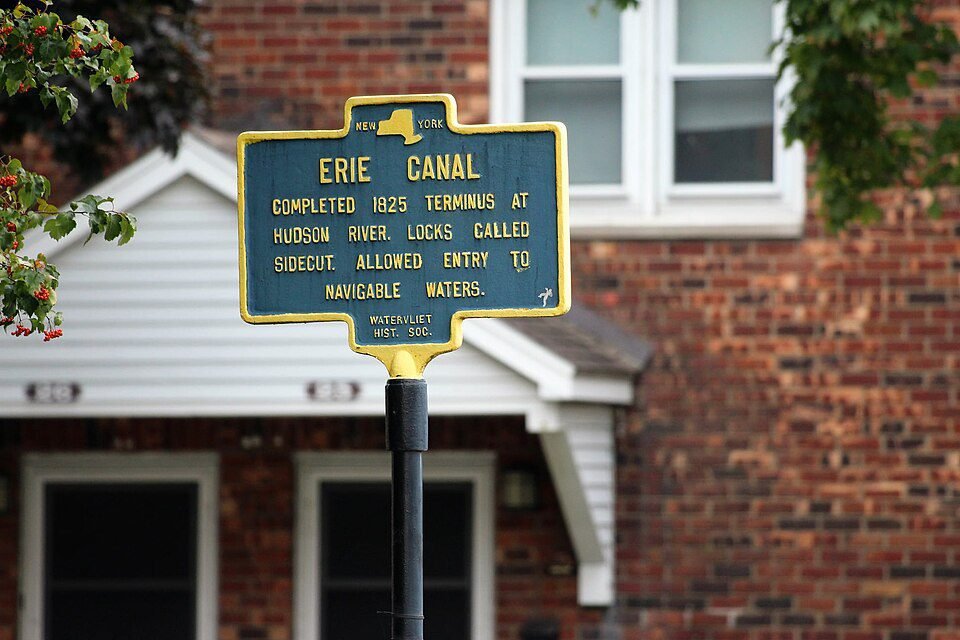
Erie Canal and Toll-Financing
How New York borrowed for a major canal and used tolls to help pay for it.
In the early 1800s, moving goods across New York State was slow and expensive. Roads were rough, distances were long, and the Appalachian Mountain range barrier made inland trade difficult. The Erie Canal was a bold public works bet: build a water route connecting the Hudson River to Lake Erie, and New York could link the Great Lakes region to Atlantic trade. The canal ran 363 miles when completed in 1825. Total construction spending is commonly described at about $7 million to $7.5 million. [1]
The financing was central to the project. New York did not simply pay for the canal out of one year’s cash. It borrowed for a long-lived asset and used tolls to help repay the cost. Tolls connected users of the canal to the cost of building and maintaining it. Freight moving along the canal generated revenue, giving the state a repayment stream tied to the improvement itself.
The canal changed commerce. It lowered transportation costs, shortened travel times, and helped New York City grow as a commercial center. Farm goods from the interior could move east more easily, and manufactured goods could move west. Towns along the route grew. Land values changed. Migration and market access expanded. A public investment in transportation reshaped private economic activity across a large region. [2]
The Erie Canal also showed the power and risk of state debt. Borrowing allowed New York to build something much larger than annual taxes alone might have allowed. But debt required confidence that future tolls and revenues would be sufficient. If the canal had failed, taxpayers could have been left with a heavy burden.
The money trail ran through bonds and toll booths. New York borrowed to build the canal, then used freight and passenger tolls to help repay debt and maintain the route. This linked payment to use in a way taxpayers could understand. The canal was expensive up front, but lower transportation costs created gains for farmers, merchants, shippers, cities, and consumers. [1]
Maintenance was part of the finance story too. Canals require dredging, lock repairs, staff, and management. Infrastructure finance always has two chapters: build and sustain. The Erie Canal’s success rested not only on authorizing debt, but on operating a revenue system that kept the route useful.
The canal left a durable lesson: debt can build opportunity when a project creates real value and has a credible finance repayment plan. Public finance turned geography into a wider market, and created economic opportunity and growth.
Fiscal Facts
- The Erie Canal opened in 1825 after running 363 miles from the Hudson River to Lake Erie. [2]
- Construction cost is commonly described at about $7 million to $7.5 million. [2]
- New York used borrowing for construction and tolls to help repay the debt.
- The canal lowered transportation costs and helped connect interior farms to Atlantic trade.
References
[1] New York State Archives, Erie Canal passenger ticket activity: https://considerthesourceny.org/activity/passenger-ticket-august-9-1837
[2] Erie Canalway National Heritage Corridor, Erie Canal history: https://eriecanalway.org/learn/history-culture
[3] Library of Congress, Erie Canal resources: https://www.loc.gov/collections/erie-canal/about-this-collection/