
250 Years of Public Finance in America
Stories of how Americans funded and Built the Nation
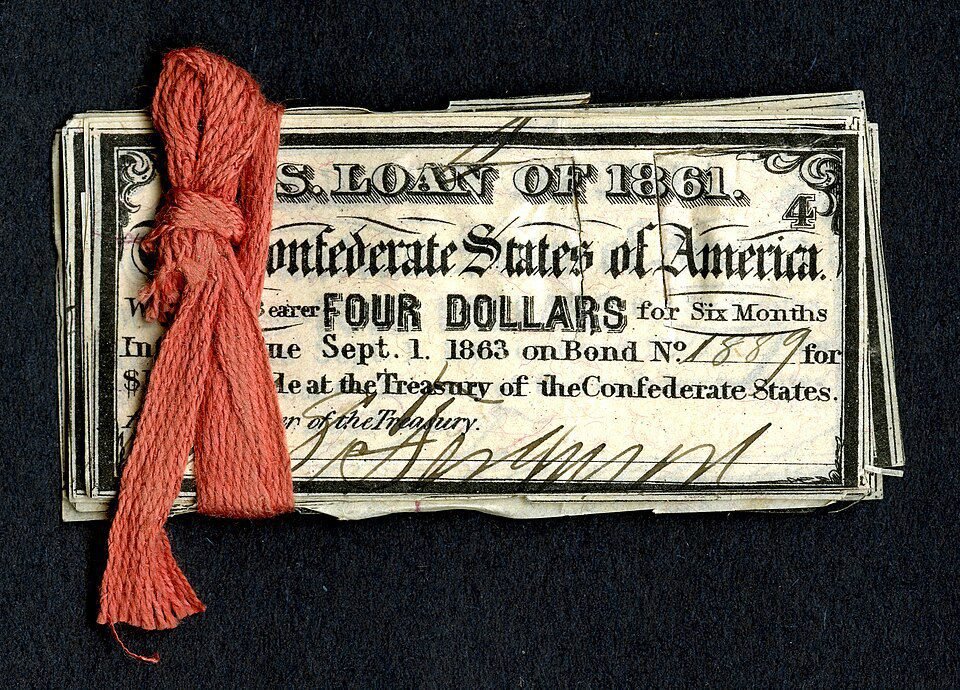
Civil War Bonds and Internal Revenue
How taxes, bond markets, and new revenue offices helped sustain the war effort.
The Union did not pay for the Civil War with one tool. It used borrowing, taxes, customs duties, paper money, and new financial institutions. That mix mattered because the war was too large for the old federal revenue system. Before the war, the federal government relied heavily on tariffs. Once the war began, it needed money for armies, rail transport, weapons, food, medical care, ships, and pensions. Ordinary peacetime finance was not enough.
Bond sales became a central tool. The Treasury sold securities to investors, banks, and ordinary households through networks that reached beyond Wall Street. Borrowing allowed the government to pay immediate bills and spread costs over time. A person who bought a bond was lending money to the government in return for interest and repayment later.
Taxes also expanded. In July 1862 Congress established the Office of the Commissioner of Internal Revenue (called the Bureau of Internal Revenue). This organization was later renamed the Internal Revenue Service (IRS) that we know today. This new organization helped the Government raise revenue and strengthened revenue administration. The first federal income tax was enacted during the war, and internal revenue offices collected taxes on incomes, manufactures, licenses, and other items. Taxes raised money directly, but they also supported borrowing by showing bond buyers that the government had a future revenue stream. [2]
The National Banking Acts connected banks, federal bonds, and a more uniform national currency. Banks were encouraged to hold federal bonds, which created demand for federal debt and helped standardize money in circulation. War finance therefore reshaped everyday financial life, not only Treasury accounts. [2]
The changes impacted households and institutions. People bought bonds, banks held federal securities, taxpayers paid new internal taxes, and Treasury officials built a wider collection system. Bond sales supplied cash before taxes could cover every bill. Taxes made interest payments more credible. National banking laws tied the financial system more closely to federal debt.
The costs were not only financial. Taxes were debated. Borrowing created future interest payments. Bondholders and taxpayers experienced the system differently. Soldiers and families bore personal costs that no ledger fully captures. The Confederacy’s finance problems, including weaker credit and heavy reliance on money printing, also show how revenue and trust affect wartime endurance. [3]
Civil War bonds and internal revenue connected households, banks, taxpayers, and the Treasury to the war effort. They helped pay for Union’s war efforts and our country’s survival and left behind a legacy of larger federal revenue, debt, and banking structure.
Fiscal Facts
- The Civil War pushed the federal government beyond its old tariff-heavy revenue system.
- Congress created new internal taxes, including the first federal income tax, during the war. [1]
- Bond sales turned private savings into federal war funding.
- The National Banking Acts connected banks, federal bonds, and a more uniform national currency. [2]
References
[1] Internal Revenue Service, Historical Highlights of the IRS: https://www.irs.gov/newsroom/historical-highlights-of-the-irs
[2] Federal Reserve History, National Banking Acts: https://www.federalreservehistory.org/essays/national-banking-acts
[3] U.S. Senate, National Bank Acts: https://www.senate.gov/artandhistory/history/common/civil_war/NationalBankActs.htm