
250 Years of Public Finance in America
Stories of how Americans funded and Built the Nation
The Sixteenth Amendment and the Modern Income Tax
How a constitutional change gave the federal government a new revenue source.
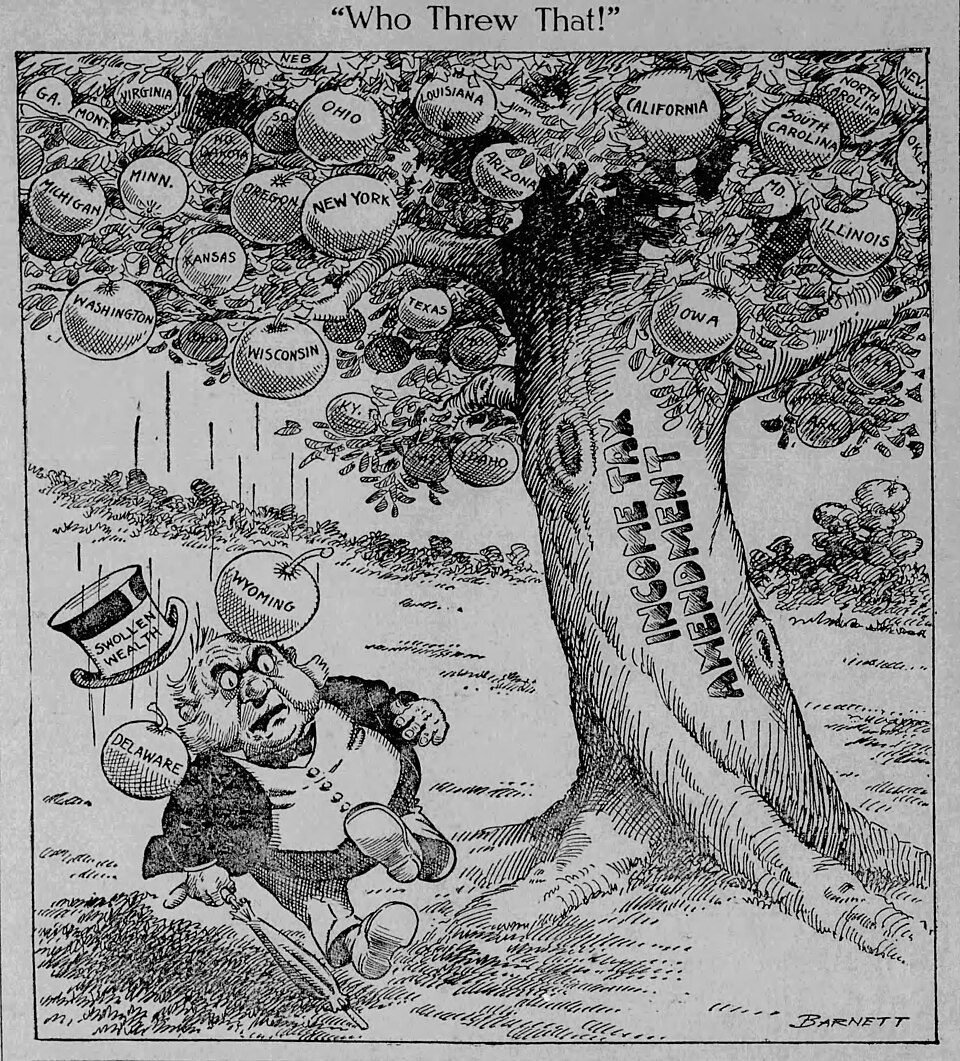
For much of the nineteenth century, the federal government relied heavily on tariffs and other indirect taxes. Tariffs raised money by taxing imported goods. They were easier to collect at ports, but they also tied federal revenue to trade and consumer prices. As the national economy became more industrial, reformers argued that the federal government needed a broader and more flexible revenue source. The Sixteenth Amendment, ratified in 1913, gave Congress clear authority to impose a federal income tax. [1]
The first modern income tax was narrow by today’s standards. The 1913 tax began with low rates and high exemptions, so only a very small share of households owed tax. A common summary is that it included a 1 percent normal tax above exemption levels, with additional surtaxes on very high incomes. The tax was presented as a way to raise revenue from those with greater ability to pay while reducing reliance on tariffs. [1] The amendment allowed for Progressive taxation, non apportioned. Meaning, the Government could now charge higher tax rates to those earning more. Prior to the passing of the 13th amendment taxes had to be apportioned, meaning split evenly between tax payers.
These changes mattered because income taxes could grow with the economy, becoming the largest source of Federal revenue today. Wages, salaries, business income, and investment returns gave the federal government a broader base than port collections alone. When the United States later faced World War I, the Great Depression, World War II, and modern national programs, the income tax became one of the central ways to finance them. [2]
The income tax also required administration. A tax on income asks what counts as income, what exemptions or deductions apply, who files, and how compliance is checked. Forms, definitions, records, enforcement, appeals, and taxpayer guidance all became part of the system. A revenue tool is only useful if it can actually be administered.
The politics did not disappear. Supporters saw the income tax as fairer and better matched to a modern economy. Critics worried about federal power, privacy, complexity, and taxpayer burden. Those debates continue whenever rates, credits, deductions, filing systems, and enforcement are discussed. [3]
The change allowed a more diversified revenue stream away from customs and ports to paychecks and returns. Tariffs still mattered, but income taxation allowed federal revenue to reach the economic activity of the larger wage and salary economy with tariffs and customs making a much smaller portion of revenue. The Sixteenth Amendment did not write the modern tax code. It gave Congress a durable tool that tied to increasing income and salaries which expanded revenue as the country grew.
Fiscal Facts
- The Sixteenth Amendment was ratified in 1913. [1]
- The 1913 income tax began narrowly, with a 1 percent normal tax above exemption levels and surtaxes on very high incomes. [3]
- Taxes were intended only for the wealty and the new amendment allowed for Progressive taxation
- Income taxation gave the federal government a revenue source that could grow with a larger wage and salary economy.
- The amendment authorized the tax; later laws set rates, exemptions, deductions, and filing rules.
References
[1] National Archives, 16th Amendment: https://www.archives.gov/milestone-documents/16th-amendment
[2] U.S. House of Representatives History, Ratification of the 16th Amendment: https://history.house.gov/Historical-Highlights/1901-1950/The-ratification-of-the-16th-Amendment/
[3] National Archives Prologue, 100 years of federal income taxes: https://prologue.blogs.archives.gov/2013/04/02/the-16th-amendment-and-100-years-of-federal-income-taxes/