
250 Years of Public Finance in America
Stories of how Americans funded and Built the Nation
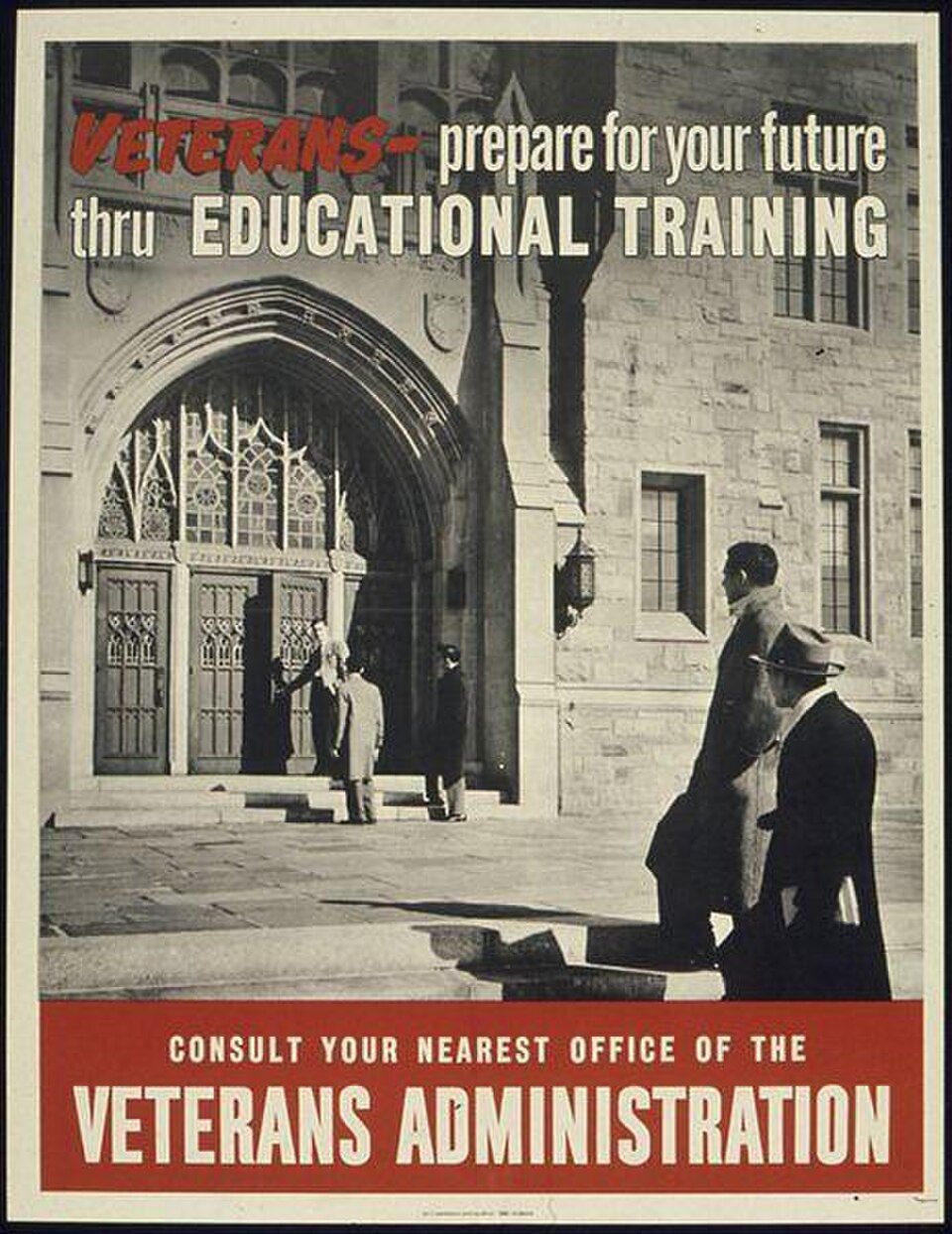
The GI Bill and Public Finance
How public finance helped millions of veterans after the War.
When World War II ended, millions of service members needed to return to civilian life. The country faced a practical question: how could it help veterans assimilate back into society: education, work, and housing without repeating the instability that followed earlier wars? The Servicemen’s Readjustment Act of 1944, widely known as the GI Bill, used federal benefits to support that transition. It provided college and training support, unemployment assistance, and home loan help. [1]
The GI Bill was not a single check. Education benefits helped pay tuition, fees, books, and living support. Loan guarantees reduced lender risk for home loans, making it easier for veterans to obtain mortgage credit. Unemployment benefits provided temporary support while veterans looked for work. Each tool addressed a different part of the return to civilian life.
The numbers show why the program mattered. By the time the original World War II GI Bill ended in 1956, public summaries report that 7.8 million veterans had used education and training benefits and about 2.4 million had signed up for VA-backed home loans. Those figures explain why the program affected colleges, housing markets, lenders, employers, and families, not only individual veterans. [2]
The loan guarantee is especially useful to understand. The government did not have to lend every mortgage dollar directly. By guaranteeing part of the risk, it encouraged private lenders to make loans to eligible veterans. Credit support can change markets at large scale even when the government does not pay the full purchase price.
Education benefits also had ripple effects. Tuition payments supported colleges and training institutions. Living allowances supported families. More educated workers could earn more and pay more taxes later. Corporations benefited from a skilled workforce. The program served as both a benefit and an investment in human skill and our Nations future.
As with many programs, they aren’t without their challenges. The benefits were not equally available in practice. Although the law was federal, implementation often depended on local institutions, lenders, colleges that may have subjected applicants to discriminatory practices. That does not erase the program’s importance; it shows that a public benefit becomes real opportunity only when eligible people can actually use it. [3] The GI Bill provide opportunity, assimilation back into society, and helped with the future dynamism of our Nation.
Fiscal Facts
- The GI Bill was signed in 1944 as the Servicemen’s Readjustment Act. [1]
- It supported education, training, unemployment assistance, and home loan guarantees. [1]
- Loan guarantees reduced lender risk without requiring the government to lend every mortgage dollar directly.
- Benefits helped millions of veterans, though local access may have been limited for some.
References
[1] National Archives, Servicemen’s Readjustment Act of 1944: https://www.archives.gov/milestone-documents/servicemens-readjustment-act
[2] U.S. Department of Veterans Affairs, History of VA benefits: https://department.va.gov/history/
[3] U.S. Department of Veterans Affairs, GI Bill history materials: https://benefits.va.gov/gibill/history.asp
[4] Defense Visual Information Distribution Service, VA Secretary Expects Big Impact From Post-9/11 GI Bill: https://www.dvidshub.net/news/printable/519271