Whether you love or loathe the Trump administration or Elon Musk, one thing’s for sure: the DOGE platform is changing the game on government transparency.
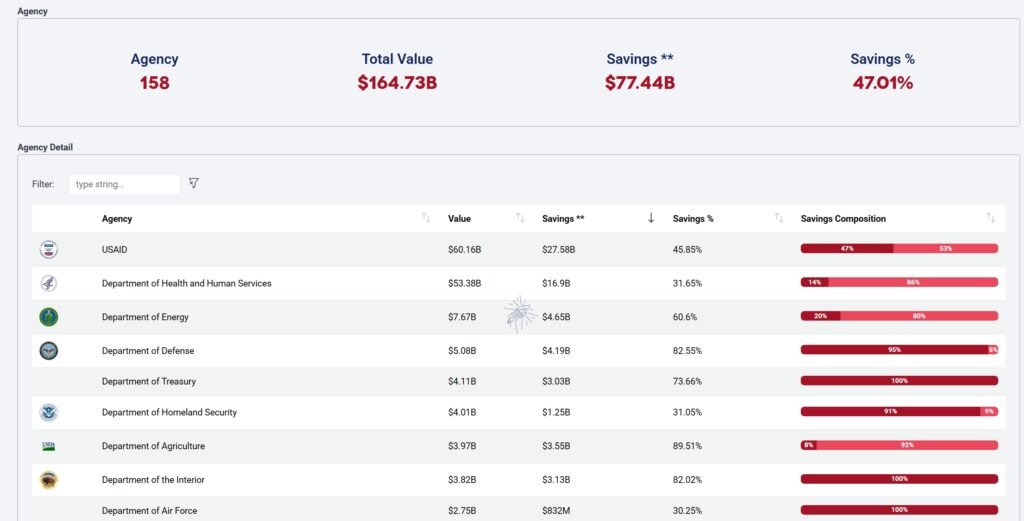
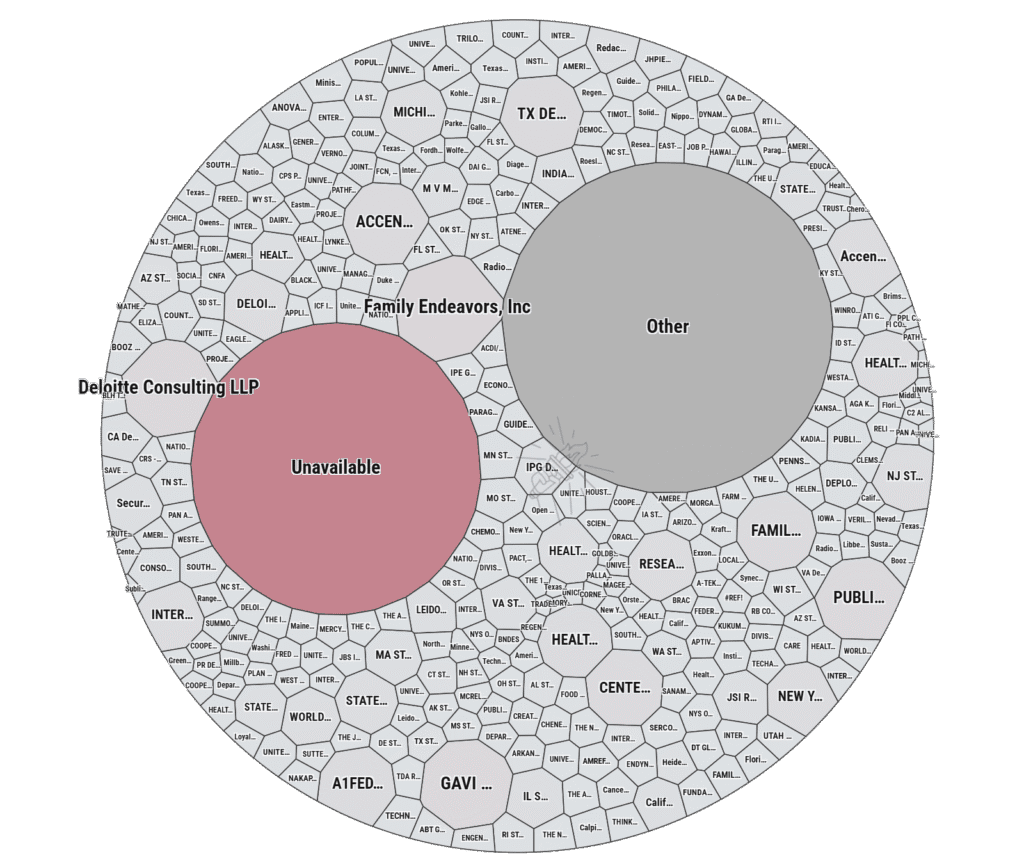
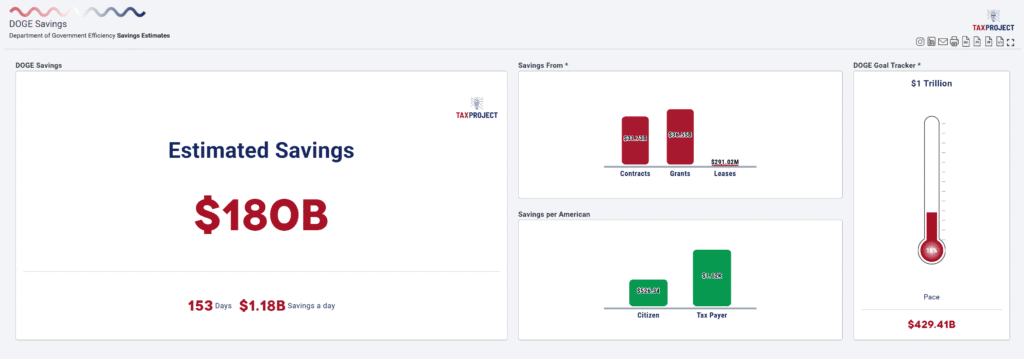
The DOGE website was a big step forward in transparency, but we’ve dialed it up to 11. The Tax Project’s DOGE Savings App gives you unprecedented access to:
Transactional-level detail on DOGE savings items
Real-time savings data straight from DOGE systems
Interactive visualizations like you’ve never seen before
No spreadsheets. Not just summaries. Just raw, searchable, visually intuitive, actionable insight.
Controversial?
DOGE for better or worse, has been the subject of a ton of controversy for sure, but this isn’t about politics — it’s about progress. Love them or hate them, DOGE has blown open the black box of government finance. The fact that this data is being exposed at all is a huge leap forward for Transparency and Open Government.
And with the DOGE API, anyone can build, analyze, or audit. That’s radical transparency — no matter what side you’re on. At the Tax Project, we’re about showing the data, and let informed citizens come up with their own opinions. You’re the boss, we just serve the data.
Why it Matters?
Track DOGE identified savings
Dig into who’s spending what — and where
See where the cuts are coming from
See which Agencies took the biggest cuts
See how much was spent on Vendors and how much was cut
Look at Contracts, Grants, and Lease details
Drill down into interactive Visual Charts
Support Transparency. Be Informed.
The DOGE Savings App is coming, and this is our Pre Release. Transparency is trending. Are you in?
Elon Musk’s DOGE Legacy: A Bold Shift Toward Reform
In a bold and controversial era of American governance, the leadership of Elon Musk at the newly formed Department of Government Efficiency (DOGE) —an informal but widely accepted moniker for his role in reshaping federal oversight and fiscal management—has become synonymous with disruption, reform, and no-holds-barred accountability. Love him or hate him, and there are plenty of both, Musk’s tenure may be remembered as one of the most consequential experiments in modern political and administrative history. His impact reaches far beyond flashy headlines or partisan interpretations: it is a story of technological transformation, fiscal reckoning, radical transparency, and the difficult balance between efficiency and public service.
Elon’s Motivation
As Musk steps away from the Trump administration, many can ponder what would motivate the worlds richest man [9] to take on such a task? To many, Elon Musk is an enigma, and this act only adds to that mystique. Musk, a long time Democrat, having voted for his first Republican in 2022 [8] took an abrupt turn to join the Trump administration. However, politics aside, why would someone that doesn’t need a job or money take on a task that is sure to draw the ire of a sizable portion of the electorate? The criticisms came at great personal costs, including protests, attacks on his companies that directly impacted his net worth (at least for a short period), and consumer pushback on his products. Some may believe that he needed the attention, and ego stroking, while others see it as a self less act of patriotism, someone acting as the adult in the room and making the hard choices that must be made to protect the long term health of the country. Whatever the motivation, this article looks at the legacy of what was accomplished and what he leaves behind.
Technological Overhaul and Accountability
One of Musk’s most immediate and lasting accomplishments was bringing Silicon Valley-style technology, AI and Data Science into the heart of the federal government’s operations. Under his leadership, sprawling bureaucracies that had long lagged behind the private sector were aggressively modernized. Artificial intelligence systems were deployed to streamline everything from fraud detection in benefits programs to auditing federal grants. Musk’s team instituted real-time dashboards across all major agencies, enforcing a level of visibility and data-driven performance management previously unimaginable in Washington [1].
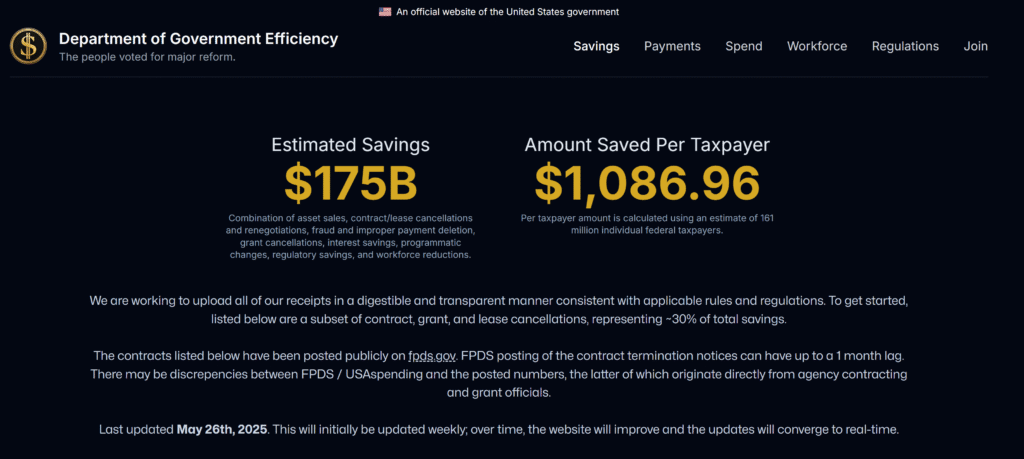
Perhaps the most emblematic achievement of this transformation was Doge.gov, a centralized platform that delivered unprecedented transparency in real-time. The site allowed any American to see federal contracts, grants, property leases, and travel expenses with a level of detail that may previously have required Freedom of Information Act (FOIA) requests. This included line-by-line analysis of project deliverables, contract amendments, vendor histories, and financial benchmarks [2]. He made this available to all, and included API’s a mechanism so that organizations like the Tax Project and other media and research organizations could analyze and build their own applications and conclusions with the newly available data. Regardless of the public’s thoughts on Musk or DOGE, this has been a welcome and commendable addition to Government Transparency and the public discourse. (Check back soon for the Tax Project’s DOGE app release)
The Unmasking of Government Waste
With transparency came revelation—and often disbelief. The audits conducted under Musk’s leadership unearthed hundreds of egregious cases of waste, inefficiency, and fraud. In one widely publicized incident, auditors discovered that over 6,000 people listed as receiving Social Security payments were officially recorded as over 110 years old—with some records dating birth years back to the 1700s [3].
Another case involved foreign entertainers. Data analytics flagged a set of Department of State grants that had inexplicably been issued to individuals labeled as “youth outreach ambassadors.” Further review revealed that a handful of those grants had been awarded to rappers and social media influencers operating out of France, Nigeria, and Brazil, with no evidence of any deliverables tied to U.S. interests [4].
“We found hundreds of millions going to people who don’t exist, and billions going to programs that haven’t been evaluated since fax machines were cutting-edge.”
Elon Musk
In total, the Doge.gov accountability initiative claims over $175 billion in cost savings and waste elimination over a five-year span, largely from program consolidation, fraud recovery, and sunsetting obsolete agencies and functions [2].
Perhaps Musk’s most ambitious—and controversial—goal was to confront America’s unsustainable fiscal trajectory. At the time of his rise, the federal government was running annual deficits approaching $2 trillion, and the national debt had exceeded $36 trillion. His administration implemented sweeping budget reforms, including mandatory zero-based budgeting, independent agency audits, and mandatory five-year cost-benefit reviews for all recurring programs [5].
He also ended the long-criticized “use it or lose it” budgeting practice that encouraged agencies to spend remaining funds at the end of the fiscal year. Instead, agencies that underspent were rewarded with multi-year budgeting flexibility and autonomy in reallocating savings. The impact was staggering. In just four years, the annual federal deficit was reduced by over 50%, and the growth rate of the national debt began to slow for the first time in decades [5].
But these victories came with painful trade-offs. Popular programs in arts, rural development, and public broadcasting faced sweeping cuts. Some veterans’ services were restructured into digital-first platforms, leaving older populations struggling with access. National parks experienced staffing shortages. Rural communities complained of reduced postal delivery and internet infrastructure delays. Public university research grants in non-STEM fields declined by over 40% [6].
Segments of the population that had long relied on these programs were furious. Critics accused Musk of treating the federal government like a tech startup—valuing performance over people, spreadsheets over stories.
His response? “A government that can’t pay its bills is a government that fails everyone.” [7]
A Legacy of Radical Transparency and Debate
Whatever one’s view of Musk’s methods, there is little debate that his time as DOGE left a permanent mark on the U.S. government’s operating culture. Transparency, once a campaign slogan, became structural policy. Every dollar saved by the federal government can now be traced on Doge.gov. Every contract has public deliverables. Every grant has a public-facing evaluation report. Government leases are posted with market comparisons and renewal dates.
He also fundamentally changed how Americans think about governance. Where once the budget was a black box, today there are visualizations, explanations, and performance indicators accessible from a smartphone [2]. His administration forced the American public to confront how little they had known—and how much had been hidden behind procedural complexity and bureaucratic walls.
Still, the country remains deeply divided on whether it was all worth it. Supporters hail Musk as a visionary reformer who saved the republic from fiscal ruin. Detractors argue he gutted the soul of the American social contract in the name of “efficiency.”
But no matter the perspective, Musk’s legacy in DOGE is clear: he dragged the federal government into the 21st century—sometimes kicking and screaming—while forcing a national reckoning with what Americans expect from their government, what they are willing to pay for, and what they can no longer afford to ignore.
[6] Government Accountability Office (GAO), “Impact of Federal Budget Reductions on Service Delivery,” Testimony before the Senate Appropriations Committee, September 2024. https://www.gao.gov/products/gao-24-604t
The American government’s pursuit of efficiency is a long and winding road, paved with good intentions and often obstructed by bureaucracy, funding battles, and a simple lack of visibility. As documented in our Government Efficiency Timeline, the quest to streamline processes and reduce waste has been a constant throughout our history. The Tax Project Institute, while remaining policy-neutral, strongly supports efforts at transparency and accountability in government, recognizing that sunlight is the best disinfectant.
One of the most significant challenges in evaluating government efficiency initiatives is their inherent lack of visibility. Take, for instance, the recent accusations of transparency against the Department of Government Efficiency (DOGE). This opacity is not unique to DOGE. While many applaud the transactional level detail DOGE is providing (albeit on X , although we are excited to see their Website evolve), which is often much more detail than prior administrations. However, others will point to these being done outside of the blanket approvals of Congress, and while more transactionally transparent, their overall macro aims, goals, directions, and intentions are not.
Many well-intentioned efficiency drives have been bogged down in commissions, buried within lengthy reports, tangled in congressional gridlock, agency bureaucracy, and, ultimately, fall victim to funding cuts, or the slow intentional death by red tape. A disheartening number of these efforts never see the light of day, resulting in wasted resources and missed opportunities. The absence of a national Score Card available to the public, tracking these endeavors further exacerbates the problem. Without a clear record of initiatives launched, progress made (or not made), and obstacles encountered, it is nearly impossible to learn from past experiences or hold individuals accountable.
A Transparent Path Forward: Shining a Light
Given the tools now available to industry, this is where modern technology can offer a powerful solution. While not proposing solutions, the Tax Project Institute believes that leveraging technologies such as blockchain, Hyperledger or Dogecoin’s decentralized Proof-of-Work (PoW) mechanism, could revolutionize the way we track and manage government efficiency initiatives. Imagine a system where each efficiency effort is logged as a transactional entry on an immutable mechanism like Hyperledger or PoW. This would create a transparent and verifiable record of the initiative’s progress that can’t be changed once entered, including:
Task Assignment: Clearly identifying the individuals or teams responsible for specific tasks.
Timestamps: Recording key milestones and deadlines.
Dependencies: Highlighting any prerequisites or related efforts.
Status Tracking: Documenting the current state of the initiative (e.g., “In Progress,” “Completed,” “Stalled,” “Cancelled”).
Workflow: Project level visibility into where in a workstream an initiative stands.
Decisions: A list of decisions that impacted the delivery of the transaction, and who made them.
Justification: For any project that is cancelled, providing documented justification and reasoning for why it was cancelled.
Accountable Persons: For any initiative, who is the person accountable for delivering the result.
Accounting: Accurate accounting of bottom line results of efforts in clear metrics (e.g. Cost savings, Cost Avoidance, Productivity Gains, etc.)
Modernizing Transparency
Such a system would provide a transparent public national record of all intended efforts, allowing anyone to see who was tasked with what, when, how, and whether the effort succeeded or failed. This fosters accountability by making it easy for anyone to independently verify, track progress, and identify bottlenecks. Furthermore, a blockchain-based system would enable a streamlined workflow, ensuring that all stakeholders have access to the same, accurate information. Could America be on the precipice of a major Modernization in efficiency tracking and visibility, will the Technologist Elon Musk usher in a new Era of transparency?
The Tax Project Institute envisions a future where government efficiency initiatives are not shrouded in secrecy but rather are visible, trackable, and accountable. By shining a light on these efforts, we can empower citizens to hold their government accountable and drive meaningful progress towards a more efficient and effective public sector. This is not about pushing specific policies; it is about promoting transparency and providing the tools necessary for informed decision-making.
As the Trump administration continues to make headlines with its approach to governance, one of the most contentious issues has been the Department of Government Efficiency (DOGE), led by tech billionaire Elon Musk. At the Tax Project Institute, we remain committed to our core mission of promoting government spending transparency, ensuring that American citizens have access to the data they need to make informed decisions about how their tax dollars are spent.
The recent flurry of developments surrounding DOGE has raised questions about its scope and transparency. While government watchdog groups have expressed concerns about the agency’s operations and potential conflicts of interest, we at the Tax Project Institute do not condone any actions that may violate laws or harm individuals and organizations. However, we are interested in seeing more data become available to the public.
DOGE Mission
DOGE was established by President Trump through an executive order, with the stated goal of modernizing federal technology and software to maximize governmental efficiency and productivity. Despite this narrow focus, critics argue that the agency’s broader mission to cut government waste and slash federal regulations could have far-reaching implications. While we may not agree with DOGE’s approach, we welcome the potential for increased transparency and data availability that could arise from its activities.
At the Tax Project Institute, we believe that transparency is essential for a functioning democracy. It allows citizens to hold their government accountable and make informed decisions about public policies. Unfortunately, instead of receiving comprehensive and systematic information about government expenditures, we often rely on sensational news stories to glean insights into how American tax dollars are being spent. The lack of transparency forces us to piece together fragments of information from various sources, including the pieces emerging from DOGE.
Transparency for All
We hope that as DOGE continues its work, more data will be made officially available to the public. This would align with our mission to empower American citizens by providing them with the information they need to make informed choices. Whether one supports or opposes specific government spending initiatives, it is their right to know how their tax dollars are being used. This principle is fundamental to democratic governance and ensures that citizens can hold their elected officials accountable for fiscal stewardship.
The creation of DOGE, with its stated goal of making cuts to the federal budget and workforce, has sparked intense debate. While some may view this initiative as a necessary step towards fiscal responsibility, others see it as a threat to essential public services and jobs. Regardless of one’s stance on these policies, it is crucial that citizens have access to accurate and detailed information about government spending.
Transparency in government spending is not merely a matter of principle; it has tangible benefits for democracy. When citizens are well-informed about how their tax dollars are allocated, they can engage more effectively in public discourse and participate in decision-making processes. This engagement fosters a more accountable government, as policymakers are more likely to align their actions with public priorities when citizens are actively monitoring their activities.
Moreover, transparency can help reduce corruption and mismanagement of funds. By making budget information easily accessible, governments can deter corrupt practices and ensure that resources are allocated efficiently. This is particularly important in the context of tax expenditures, where a lack of transparency can obscure the impact of tax policies on economic outcomes.
Tools like USAspending.gov and other fiscal data platforms have made significant strides in providing insights into federal spending. However, there is still room for improvement. At the Tax Project Institute, we advocate for policies that ensure American citizens have access to comprehensive and reliable data on government expenditures. By promoting transparency, we can build a more accountable and responsive government that truly serves the interests of all Americans.
Summary
In conclusion, while the Trump administration’s approach to reform may be contentious, our focus at the Tax Project Institute remains on the core principle that citizens have a right to know how their government operates and allocates resources. We hope that initiatives like DOGE will lead to more official data releases, reducing reliance on sensational news leaks and fostering a more informed and participatory citizenry. By advocating for greater transparency, we aim to empower Americans to engage more actively in their democracy, fostering a more accountable and responsive government.
Now that the election is over and Donald Trump has been elected to return to the White House, the new administration is poised to name Elon Musk as the head of a newly formed Government agency: Department of Government Efficiency (DoGE). While this appointment may be viewed as either a refreshing change, or terrifying thought, at the Tax Project Institute we want to stick to our nonpartisan values and discuss what those changes might mean.
If, as expected, Elon Musk is appointed to head this agency it seems reasonable to assume he will bring new and potentially dramatically different approaches to Government spending and is likely to streamline government operations and slash federal spending as he has done with other organizations like Twitter. While other Government efficiency efforts have been done before, these ambitious goals include cutting the federal budget as stated by $2 trillion could and will dramatically reshape the scope and scale of Government, and potentially the services provided, as well as the impact of Government on the Economics of our country. This bold fiscal policy aims to address the nation’s spiraling deficit and ballooning national debt, while simultaneously promoting a more transparent, data-driven government will have deep and lasting impacts on our country if enacted.
Musk’s reputation for innovation and unconventional thinking is expected to drive a focus on technology and efficiency across federal agencies, potentially paving the way for significant cost reductions. However, achieving these cuts while maintaining essential services raises complex challenges, especially as the government confronts rising interest payments on the national debt and an ongoing annual deficit exceeding $1 trillion. This article delves into the prospects and concerns surrounding this new administration’s fiscal direction, particularly in the context of transparency and public accountability, alongside a list of aspirations that citizens have for a more open government.
Prospects and Challenges for a $2 Trillion Budget Reduction
The goal of reducing federal spending by $2 trillion is both promising and fraught with potential challenges. Given that the US Federal Government Revenue was $4.5 trillion1, the act of removing $2 trillion (more than 44%) would be a significant undertaking. As likely the most ambitious target proposed by any administration, this cut has far-reaching implications, particularly in relation to deficit reduction and debt management. Below are several anticipated effects, both positive and challenging, of enacting such a substantial fiscal policy.
1. Progress in Deficit and Debt Reduction: With the national debt surpassing $35 trillion and continuing to grow, and annual budget deficits more than $1 trillion, a $2 trillion reduction in Government spending could provide a substantial offset to the deficit, potentially balancing the budget over time with fiscal discipline. If successful, this could also ease the government’s debt burden, reducing the need for borrowing and interest payments that account for a growing share of federal expenditures. As we reduce our National Debt and Interest on Debt, that could free the country to increase spending on higher priority items of need.
2. Risk to Essential Public Services: Federal spending cuts of this magnitude are bound to affect a range of public services. Mandatory spending programs, such as Social Security, Medicare, and Medicaid, currently consume a large portion of the budget, leaving discretionary spending—including defense, education, and infrastructure—at risk of major reductions. The challenge for the new administration and the DoGE will be to identify areas for efficient cost-cutting without diminishing critical services. Roughly two thirds of the Federal Budget are considered Entitlements and are legally mandated by law. So, both Fiscal AND Legislative changes are likely required to achieve significant cuts, or major changes in Entitlement programs which will have to be addressed if cuts are expected to approach anything near $2 trillion. These could take the form in Social Security updates like changes to retirement eligibility, increases in contributions, or reductions in benefits. It may also include items to put them on better fiscal paths like having Social Security funds invest in capital markets versus Treasuries for higher and more sustainable returns. It could also include the creation of a Sovereign Wealth Fund.
3. Economic Ripple Effects: Federal spending creates demand and economic activity, particularly in times of downturns, by providing funding to numerous sectors. If the Government was making wise investments with good future returns for the Economy, then reducing the budget will slow contributions to GDP, with potential implications for employment and economic stability in areas reliant on federal contracts and support. While it is unlikely that significant portions of Government investments have positive ROI, there of course will be some. A careful balance is needed to avoid inadvertently disrupting the economy, especially in critical industries such as defense, education, and healthcare.
4. Interest Payments on the National Debt: The U.S. government currently spends a significant portion of its budget on interest payments for the national debt (basically the national credit card fees). Reducing the deficit and limiting further debt accumulation could help stabilize and over time reduce these interest obligations, freeing up funds for other initiatives. However, such an outcome hinges on the administration’s ability to sustain spending cuts without compromising economic performance or resorting to additional borrowing. The interest alone on our National Debt exceeded $1 trillion dollars2 this year, surpassing the US Military budget as the 3rd largest item on the Federal Budget. (See our Debt Clock to see what we could buy instead)
Hopes for Greater Transparency and Accountability
Beyond fiscal reform, the public’s expectation for transparency remains high. With Musk overseeing government efficiency initiatives it appears likely he will use a technology-driven approach to transparency that hopefully enhances public access to information. These priorities reflect a collective desire by Americans for an open government that promotes citizen engagement and holds itself accountable. Key areas of focus include:
1. Open and Accessible Government Data: Making government data more accessible is central to fostering public trust and enabling citizen oversight. This includes ensuring that data on federal spending, program effectiveness, and agency performance are freely available and easy to navigate. Providing open data also enables journalists, researchers, and citizens to independently monitor government actions, thereby enhancing accountability.
2. Reliable and Authoritative Data Sources: To improve the quality of publicly available information, there should be a single, authoritative source for government data, similar to how agencies like the Office of Management and Budget (OMB) and the Congressional Budget Office (CBO) provide budget and financial reports. Centralizing these data sources would improve consistency and reliability, helping the public make more informed assessments of government initiatives. There should not be a dozen budget values for the same data on a dozen government websites. Citizens should not have to navigate this maze and determine what is real.
3. Real-Time and Updated Data Access: Providing timely access to government data could allow for better tracking of government operations. Currently, data lags and gaps sometimes prevent the public from seeing an accurate picture of federal spending and performance. Real-time data availability would facilitate more immediate oversight, enabling citizens and watchdogs to identify trends and inefficiencies as they happen when agencies and officials can be held accountable. Negligence, Omission, Ignorance, or Incompetence should not shield those accountable for performing for the American citizen.
4. Centralized and Standardized Government Systems: One of the challenges in promoting transparency is the fragmentation of data across multiple departments and agencies each having their own separate systems and practices. A centralized system for government data, with standardized formats and reporting practices, would streamline access and reduce the burden of sifting through disparate data sources and simplify Government accounting and hopefully lead to increased efficiency.
5. Promoting an API Economy: Enabling API (Application Programming Interface) access to government data would encourage the development of tools, dashboards, and other applications that present this information in user-friendly formats. An API economy would allow developers to build tools for the public to access and analyze government data in new ways, expanding transparency efforts and driving innovation in how the public interacts with government information.
6. Reporting Transparency: Having the Government produce similar annual and quarterly reporting like that used for public corporations would greatly benefit transparency. In the private sector, public companies are required to file statements of financial health and transparency annually and quarterly. These 10K and 10Q statements are standardized and easily comparable between companies and provide a historical view that can be used to make assessments of past and future performance. Similarly, if the government provided a similar 10K/10Q reporting would be a major step forward in transparency. Some groups like USAFacts.org have attempted to produce a government 10K but an official 10K that would require an audited financial statement and officer signoff would be a major step forward in transparency and accountability.
The Department of Government Efficiency: Elon Musk’s Role
The creation of the DoGE, with Musk at its helm, would symbolize the new administration’s drive to bring private-sector efficiency to federal operations. Given Musk’s track record of disruptive innovation at companies like Tesla and SpaceX, his appointment may signal a move toward leveraging technology, automation, and streamlined processes to minimize waste and maximize productivity within government agencies. Below are some potential avenues Musk might explore to achieve these goals.
1. Technological Innovation for Cost Reduction: Musk’s experience with automation and artificial intelligence (AI) could translate into technological upgrades for government operations. Automation could reduce administrative costs, freeing up resources for other priorities, while AI could be used to analyze data and streamline decision-making processes. However, implementing such changes on a government-wide scale would require balancing efficiency with service quality.
2. Cultivating Private-Sector Accountability Standards: The private sector often enforces accountability and cost-efficiency as core values, and Musk’s leadership could promote a similar culture within federal agencies. This could lead to a reduction in wasteful spending and a renewed focus on delivering measurable results. However, government operations differ significantly from private enterprises, and accountability standards must consider the unique public-service mission of government work.
3. Balancing Efficiency with Public Needs: While the private sector emphasizes efficiency, the government must provide essential services and maintain levels of service in many areas where a private company would not be economically feasible, or large capital projects only possible with state level funding. As Musk’s DoGE explores ways to reduce costs, it will need to ensure that essential services remain accessible to all citizens. This balancing act may require adjustments to private-sector principles to fit the public-interest framework of government services, and a dialogue between the public and private sector on what services and quality levels are acceptable. Defining Government Services, Service Levels, and Scope for each Government agency would go along way at standardizing services to the public. There is likely to be widescale disagreements finding the balance.
A Path Toward Fiscal Responsibility and Public Trust
With the incoming administration’s ambitious goals for a government that is financially responsible, innovative, and accountable many are hoping that they play equal weight on balancing against the negative consequences if done poorly. The proposed $2 trillion budget cut, while fraught with challenges, represents a meaningful step toward addressing the national debt and reducing the deficit.
Yet, achieving these savings will require a delicate balance, as well as the guidance of a government that prioritizes public needs alongside fiscal restraint. As the new administration takes office, the public’s hope for openness, innovation, accountability, and balance against negative impacts remain high. These aspirations reflect a broader desire for a government that is both efficient and responsive to the needs of its citizens, paving the way for a future
Tax Project Institute is a fiscally sponsored project of MarinLink, a California non-profit corporation exempt from federal tax under section 501(c)(3) of the Internal Revenue Service #20-0879422.