Jun 26, 2025
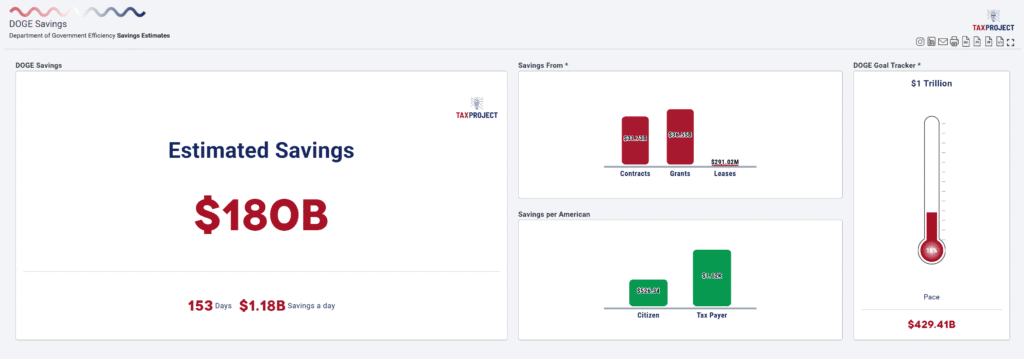
DOGE Savings App Release Launch
See Where the Money Really Goes.
Whether you love or loathe the Trump administration or Elon Musk, one thing’s for sure: the DOGE platform is changing the game on government transparency.
This Isn’t Your Grandpa’s Budget Report
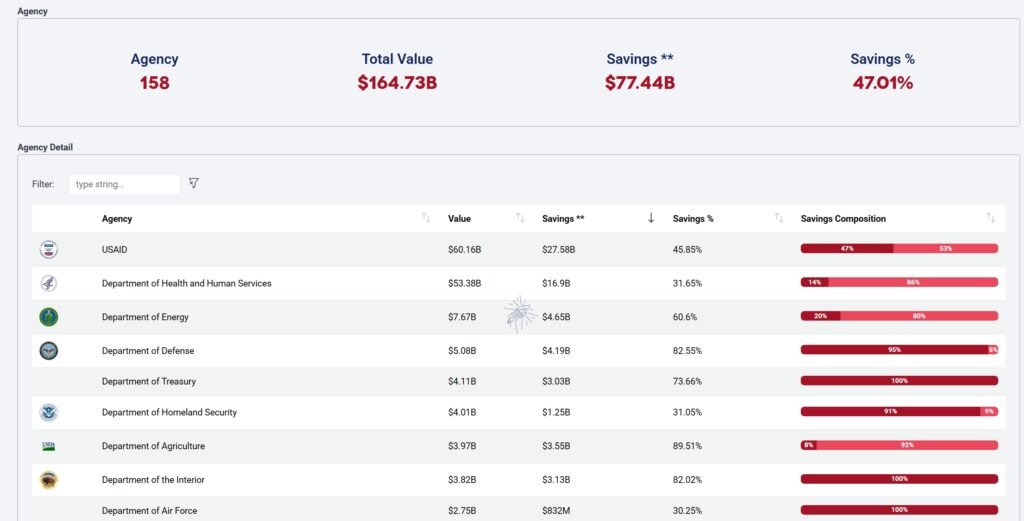
The DOGE website was a big step forward in transparency, but we’ve dialed it up to 11. The Tax Project’s DOGE Savings App gives you unprecedented access to:
- Transactional-level detail on DOGE savings items
- Real-time savings data straight from DOGE systems
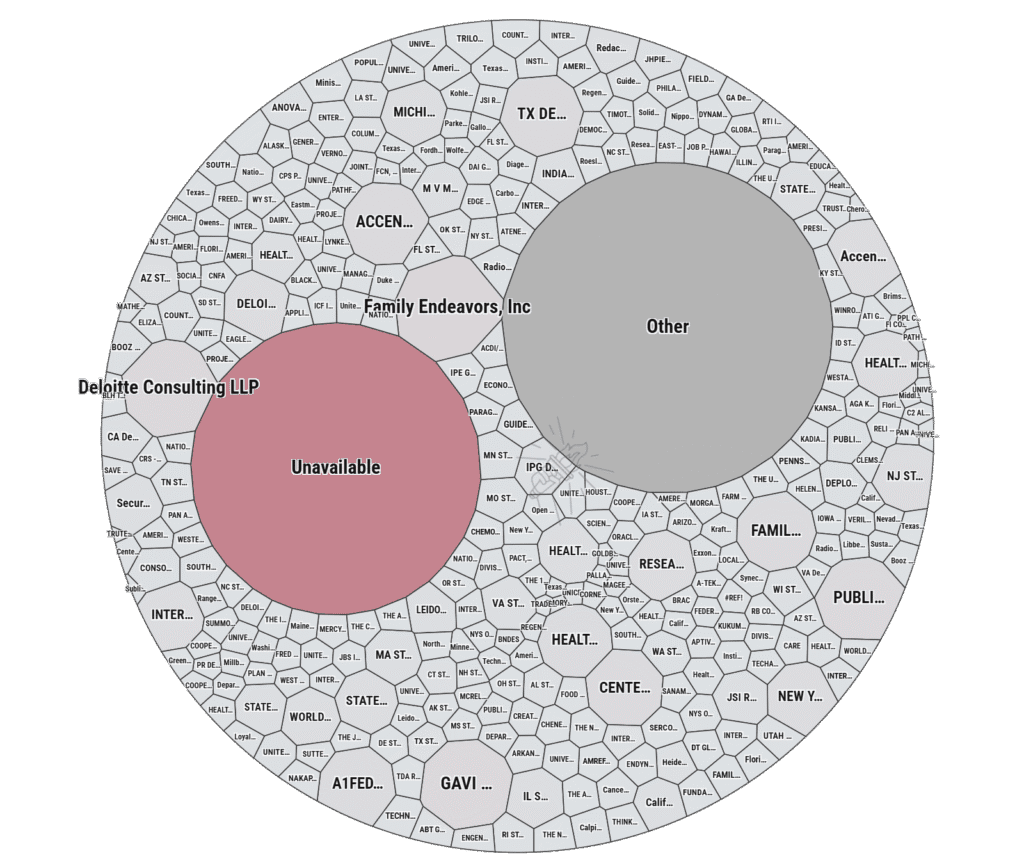
- Interactive visualizations like you’ve never seen before
No spreadsheets. Not just summaries. Just raw, searchable, visually intuitive, actionable insight.
Controversial?
DOGE for better or worse, has been the subject of a ton of controversy for sure, but this isn’t about politics — it’s about progress.
Love them or hate them, DOGE has blown open the black box of government finance. The fact that this data is being exposed at all is a huge leap forward for Transparency and Open Government.
And with the DOGE API, anyone can build, analyze, or audit. That’s radical transparency — no matter what side you’re on. At the Tax Project, we’re about showing the data, and let informed citizens come up with their own opinions. You’re the boss, we just serve the data.
Why it Matters?
- Track DOGE identified savings
- Dig into who’s spending what — and where
- See where the cuts are coming from
- See which Agencies took the biggest cuts
- See how much was spent on Vendors and how much was cut
- Look at Contracts, Grants, and Lease details
- Drill down into interactive Visual Charts
Support Transparency. Be Informed.
The DOGE Savings App is coming, and this is our Pre Release. Transparency is trending. Are you in?
Feb 19, 2025
There is a common saying in business, “If it isn’t monitored, then it isn’t managed.” In essence, oversight is crucial for effective management. The Tax Project is dedicated to examining transparency and the responsible use of taxpayer dollars. This article analyzes claims made by an independent source (referred to as “DOGE”) regarding data within the Social Security system. This analysis is provided as an example for how it might be Monitored and Managed, and helped in the placing of the public’s Trust, had it been made public to begin with.
We will caution that the following analysis is based on public statements and data released by DOGE, and their analysis of Social Security. The Tax Project cannot independently verify the validity of this data, and therefore the conclusions presented here should be viewed as an example and not as an expert analysis.
“Sunlight is said to be the best of disinfectants; electric light the most efficient policeman.”
Louis D. Brandeis
DOGE Claim
The following analysis provides context for a data release by DOGE, who posted their analysis on the number of individuals marked as “alive” in the Social Security system, categorized by age group (Image Attached). Here is the post:
The Tax Project has included the data, and used OCR, as a way to clarify the analysis, and show that it can be reviewed and verified.
Analysis of Social Security Data
According to the data provided by DOGE, the total number of individuals listed as “alive” in the Social Security system is 398 Million (398,416,213). The Tax Project acknowledges that this data has not been independently verified and presents this analysis as an example of the potential benefits of increased transparency in government data.
A comparative analysis with U.S. Census Bureau population estimates (~341.4 million) suggests a discrepancy of approximately 57 million individuals. Further research is needed to understand the factors contributing to this difference. Potential explanations include differences in data collection methodologies, reporting lags, or the inclusion of non-citizens within the Social Security database.
Age Group Discrepancies
The data also highlights notable figures within specific age groups:
- Individuals aged 100 and Over: The dataset indicates that over 20 Million (20,789,524) individuals are within this range. This contrasts with estimates from a Pew Research study, which suggests there are roughly 101,000 Americans aged 100 or older. This would represent roughly 5-6% of US Population over 100, overstating the Pew data by over 200 times (20,000%).
- Individuals aged 100-109: The dataset indicates 4 Million (4,734,407) individuals within this age range.
- Individuals aged 120-129: According to the provided data, there are 3 Million (3,472,849) individuals listed within this age range. This raises questions, as the oldest verified living human lived to be 122 years old, and the oldest living American lived to 119.
- Individuals aged 130 and Over: The dataset indicates that roughly 9 Million ( 8,955,261) individuals are within this range. Given the oldest living American if you combine the 120-129 age group and this 130 and over group that would be over 12 Million individuals in the dataset older than the oldest recorded American.
- Anomalies: The data reports 1.3 Million people over age 150, including one individual in the 360-369 age range or roughly 3 times maximum expected lifespan of an individual.
Potential Implications
These discrepancies raise questions about the accuracy and reliability of the data within the Social Security system, and if true erode the public trust. While the data does not directly indicate improper payments, the presence of a significant number of individuals listed in age ranges exceeding known human lifespans warrants further scrutiny. Erroneous data may potentially impact resource allocation and be subject to abuse and mismanagement. Data validation and reconciliation are necessary to ensure funds are properly allocated. Based on the 20 million excess population of 100+ year old persons in the database at the average Social Security annual benefit of $23,700 the potential misallocation could be over $470 Billion a year. While it is highly unlikely that the actual figure of improper payments, if any, is any where near this figure the discrepancies create opportunities for poor outcomes.
Transparency and Data Management
The Tax Project advocates for increased transparency in government data management practices. Making Social Security data more accessible to public scrutiny could potentially facilitate independent verification and improve data quality. Robust data validation processes are essential to ensuring the responsible and productive use of taxpayer dollars. Greater transparency could include:
- Regular, independent audits of Social Security data management practices.
- The creation of a publicly accessible data portal (while protecting individual privacy) to allow for external analysis.
- Improved data documentation and metadata to clarify data collection methodologies and potential limitations.
The Tax Project continues to focus on transparency, and helping the public understand the use of their Tax dollars. We hope that this kind of transparency becomes available in the future so that all Americans can inspect and understand where their money is spent.
Nov 30, 2024
Transparency in government ensures accountability and trust between citizens and their leaders by making the workings of governance open to public scrutiny. Over the years, significant strides have been made to embed this principle into U.S. law, marking milestones in the journey toward openness. The Freedom of Information Act (FOIA) of 1966 laid the groundwork, granting citizens the right to access federal records and fostering a culture of accountability. The FOIA Improvement Act of 2016 strengthened this by requiring agencies to operate with a presumption of openness. In recent years, laws like the OPEN Government Data Act have further advanced transparency by mandating federal agencies to make data open and machine-readable, emphasizing the strategic use of public data for innovation and civic engagement. This timeline explores the evolution of these landmark efforts, showcasing the progress made and the challenges that remain in ensuring an informed and empowered citizenry.
Establishes the public’s right to request access to records from any federal agency, a major milestone in Government Transparency.
Significance:
Allowed ordinary citizens, media, and watch dog organizations to request information
A giant step in Transparency allowing citizens to access data walled behind previously unobtainable Government bureaucracies
Codified the presumption of openness in government, allowing citizens to hold agencies accountable
Establishes a code of fair information practices for personal information maintained by federal agencies.
Significance:
- Gives individuals the right to access and amend their records, complementing FOIA
- Provides public recourse over the use and misuse of Government data
- Significant change in a politicized post Watergate era
- Foreshadows information age brought on by the emergence of Computer technology and data
Requires government agencies to hold open meetings, and notices prior to holding and establishes that Government meetings must be done in open.
Significance:
- Enhances transparency by allowing public attendance at agency meetings
- Meetings must be open to the public unless 10 specific exemptions are met
- Defines “Agency” and “Meeting” to remove ambiguity over which meetings should be made public
Requires agencies to make certain types of records available electronically.
Significance:
- Modernized FOIA for the digital age, improving access to electronic records
- Allows greater visibility and dissemination through automation
- Produces records that can be stored and replicated outside of Government allowing greater oversight
Learn More
Improves agency FOIA operations and creates the Office of Government Information Services and greater visibility and oversight of lobbying and gifts.
Significance:
- Strengthened FOIA by addressing delays and improving oversight
- Strengthens public disclosure requirements concerning lobbying activity and funding
- Places more restrictions on gifts for members of Congress and their staff
- Requires mandatory disclosure of earmarks in expenditure bills.
Learn More
Digital Accountability and Transparency Act (DATA Act) Requires federal agencies to publish SPENDING data in a standardized format.
Significance:
- Improves the transparency and quality of federal spending data
- Fosters development of numerous Applications
- Supports Research, Analysis, and Development
- Makes more data sets and information available to the public
Learn More
Codifies the “presumption of openness” and limits the use of FOIA exemptions
Significance:
- Strengthens FOIA by making it harder for agencies to withhold information
- Requires records to be public if requested 3 or more times
- Creates FOIA council to review FOIA request performance
- Creates FOIA.gov to centralize FOIA info and request submissions
Learn More
Requires federal agencies to publish their data in machine-readable formats. Part of the Evidence Act to make data available to improve Policy decisions.
Significance:
- Mandates Open Data by default
- Creates framework to manage data as an asset
- Creates central data inventory on Data.gov
- Encourages public, and Economic benefit by making data available
Learn More
Mar 12, 2024
About Sunshine Week
Sunshine Week is a national nonpartisan collaboration aimed at raising awareness about the importance of open government and public access to information. It takes place annually in mid-March, coinciding with the birthday of James Madison, the fourth President of the United States and a strong advocate for an informed citizenry. In 2024 Sunshine week is March 10-16th. Sunshine week shines the light on the importance of looking at dark and hidden areas, and exposing them to the light of day for everyone to see. Things that live in the dark, cold, and wet recesses of our world often rot, and fester and only by exposing them to the light can they be cleaned and renewed.
“Sunlight is said to be the best of disinfectants”
Louis Brandeis
Sunshine Week’s Goals
- Promote transparency and accountability within government agencies.
- Educate the public about their right to access government records.
- Encourage the use of Freedom of Information (FOI) laws to obtain public information.
How does Tax Project fit in with Sunshine Week?
The Tax Project believes firmly behind the ideals of Sunshine Week: Transparency, Open Government, and that citizens have the right and need to stay informed and be educated into what the Government does on our behalf. The Tax Project Institute’s Mission is to provide transparency to Citizens with respect to where their taxes are spent, and what they contributed. Every American has the right to know these basics. It is our strong belief that transparent, clear, and open information creates a more informed Citizenry which in turn results in a stronger, safer, and more prosperous America.
How did it come about?
Sunshine Sunday began in Florida in 2002, led by the Florida Society of Newspaper Editors. National Sunshine Week was launched in 2005 by the American Society of News Editors (which merged with the Associated Press Media Editors in 2019 to become News Leaders Association), with the support of the John S. and James L. Knight Foundation. As of December 2023, Sunshine Week is coordinated by the Joseph L. Brechner FOI Project at the University of Florida College of Journalism and Communications.
What should we take away?
- That government transparency, and openness is a right of every American
- That exercising that right, strengthens America
- That educating yourself on your government is an obligation of Citizenship
- That everyone plays the most important role in our Democracy: Citizen