The United States finds itself at a critical juncture, facing a national debt of unprecedented scale in peacetime. As of early 2025, the total national debt exceeds $36.2 trillion, with the debt-to-GDP ratio hovering around 124%, a level last consistently seen only in the immediate aftermath of World War II [1, 2]. This towering figure casts a long shadow over the nation’s economic future, raising urgent questions about its sustainability and the path forward. While the U.S. has a history of managing significant debt burdens, the current challenge is distinct in its magnitude and the underlying structural imbalances driving it. As in the old adage “When you’re in a hole, first step is to stop digging” – there is gaining recognition of the scope and scale of the challenge. Understanding the perils of this high debt and the various strategies available for its reduction is crucial for navigating America’s fiscal future.
The Current Debt Landscape and its Dangers
The current debt level is not merely a number; it represents a fundamental imbalance between federal spending and revenue. Projections indicate that, without significant policy changes, federal debt held by the public could rise to 156% of GDP by 2055 and 206% by 2075 [3]. This trajectory is driven primarily by increasing outlays on major entitlement programs like Social Security and Medicare, coupled with surging net interest costs and a revenue stream that isn’t keeping pace with expenditures [3].
The dangers associated with such high and rising national debt are multifaceted and can have profound impacts on the economy and the lives of ordinary Americans:
Slow Economic Growth: High government borrowing can “crowd out” private investment. When the government demands a large share of available capital, it can drive up interest rates, making it more expensive for businesses to borrow and invest in job creation, innovation, and expansion. This ultimately dampens long-term economic growth and reduces wages [3, 4]. Studies have indicated a statistically significant negative relationship between high federal debt and economic growth [4].
Inflation and Devaluation of the Dollar: While not a direct cause-and-effect relationship, persistently large deficits financed by money creation can increase the money supply without a corresponding increase in goods and services, leading to inflationary pressures. Inflation erodes purchasing power, diminishing the value of savings and making everyday goods and services more expensive for households [4, 5]. In extreme scenarios, a loss of confidence in the dollar due to fiscal instability could lead to its devaluation, further exacerbating inflation and reducing America’s global standing [4].
Higher Interest Rates: A growing national debt means the government must borrow more, increasing demand for loanable funds. This puts upward pressure on interest rates, not just for the government but also for consumers and businesses. Higher interest rates translate to more expensive mortgages, car loans, and business credit, further dampening economic activity [3, 4].
Higher Debt Service Crowding Out Other Spending: As the debt grows and interest rates rise, a larger portion of the federal budget must be allocated simply to pay interest on the existing debt. In 2024, the U.S. spent $1.1 trillion on interest, nearly doubling from five years prior, surpassing spending on national defense [6]. This rapidly increasing debt service limits the government’s flexibility to invest in crucial areas like infrastructure, education, research and development, and national security, which are vital for future prosperity [3, 4].
Risk of a Fiscal Crisis: Perhaps the most severe, albeit less predictable, danger is the risk of a fiscal crisis. This occurs when investors lose confidence in the government’s ability or willingness to manage its debt, leading to an abrupt increase in interest rates, a collapse in bond prices, and widespread economic disruption. Such a crisis could jeopardize the dollar’s status as the world’s reserve currency, making it exceedingly difficult for the federal government to borrow and fulfill its essential functions [4].
Historical Paths Out of Debt: Lessons from the Past
Despite the daunting nature of the current debt, the United States has successfully reduced significant debt burdens at various points in its history. These periods offer valuable, albeit not perfectly transferable, lessons.
Period
Initial Debt-to-GDP (Approx.)
Final Debt-to-GDP (Approx.)
Key Strategies Employed
Post-Revolutionary War (late 1700s – early 1800s) [7]
Significant, but variable
Reduced substantially
Fiscal consolidation, establishment of federal credit, tariffs, land sales.
Post-War of 1812 (1815-1835) [7]
~16% (1815)
0% (1835)
Sustained budget surpluses, significant land sales, spending cuts, strong political will to eliminate debt.
Post-Civil War (1865-early 1900s) [7]
~31% (1865)
~3% (early 1900s)
Economic growth, deflation, consistent budget surpluses, relatively frugal government spending.
Post-World War II (1946-1974) [7, 8]
117.5% (1946)
~23% (1974)
Rapid economic growth, primary budget surpluses, “surprise” inflation, financial repression (low-interest rate policies by the Federal Reserve).
The most relevant historical parallel to today’s situation is the post-World War II era, where the debt-to-GDP ratio was even higher than it is currently. While significant economic growth played a role, it was complemented by other factors like sustained budget surpluses, unexpected inflation, and periods of financial repression [8].
Ways Out of Debt, US Options
Reducing the U.S. national debt to a manageable amount (Roughly 20%-50% of GDP) would require a combination of difficult and politically challenging measures. Here are eight potential strategies:
1. Increase Taxes
How it would work: This involves directly increasing government revenue. Various approaches could be employed:
Raising Income Tax Rates: Both individual and corporate income tax rates could be increased. For individuals, this could mean higher marginal rates across income brackets or specifically for high-income earners. For corporations, reversing some recent tax cuts would increase federal revenue.
Implementing a Value-Added Tax (VAT): A VAT is a consumption tax levied at each stage of production and distribution. Many developed countries use VATs, and a broad-based VAT in the U.S. could generate substantial revenue [9].
New Payroll Taxes: Expanding the base of earnings subject to Social Security taxes or increasing the payroll tax rate could bolster these critical programs and contribute to overall revenue.
Eliminating or Limiting Deductions: Reducing tax breaks, such as itemized deductions or certain tax preferences, broadens the tax base and increases effective tax rates for many taxpayers [9].
“Sin Taxes” or Carbon Taxes: Taxes on goods like tobacco, alcohol, or carbon emissions could provide revenue while potentially discouraging certain activities.
Challenges: Tax increases are often politically unpopular and can face strong opposition from various interest groups and taxpayers concerned about their impact on economic growth and personal income.
2. Lower Spending (Austerity)
How it would work: This involves reducing government expenditures across the board.
Mandatory Spending Reform: The largest portions of the U.S. budget are mandatory programs, primarily Social Security, Medicare, and Medicaid. Reforms could include adjusting eligibility ages, altering benefit formulas, or establishing caps on federal funding for these programs. Given the aging population, these reforms are often cited as critical for long-term fiscal sustainability [3, 9].
Discretionary Spending Cuts: This category includes defense spending, education, infrastructure, scientific research, and other government operations. Reductions could involve limiting new projects, cutting personnel, or reducing funding for specific agencies. For example, options include reducing the Department of Defense budget or cutting funding for international affairs programs [9].
Improving Efficiency and Reducing Waste: Efforts to streamline government operations, reduce improper payments, and combat fraud and abuse can contribute to savings, though often not on the scale required to significantly impact the overall debt.
Challenges: Spending cuts, especially to popular entitlement programs or critical services, are intensely debated and politically difficult due to their direct impact on citizens and various sectors of the economy.
3. Economic Growth
How it would work: Rather than directly cutting spending or raising taxes, this strategy focuses on growing the economy faster than the debt. As Gross Domestic Product (GDP) expands, the debt-to-GDP ratio naturally decreases, and a larger economic pie generates more tax revenue even with existing tax rates.
Investing in Productivity: Government investments in infrastructure (roads, bridges, broadband), education, and research and development (R&D) can boost long-term productivity and innovation.
Pro-Business Policies: Policies that foster a favorable environment for businesses, such as regulatory reform, reduced bureaucratic hurdles, and incentives for private investment, can spur economic activity.
Trade Liberalization: Expanding trade opportunities can lead to increased exports, economic growth, and job creation.
Challenges: While desirable, relying solely on economic growth is often insufficient, especially with very high debt levels. Sustained high growth rates are difficult to achieve and maintain, and the benefits can take time to materialize. The post-WWII debt reduction showed that growth alone wasn’t enough; it required accompanying fiscal surpluses and other factors [8].
4. Inflation (Devalue Dollar)
How it would work: This involves allowing or actively encouraging a higher rate of inflation. Inflation erodes the real value of existing debt, particularly fixed-rate debt, because the government repays creditors with dollars that are worth less in real terms. Many consider this an indirect tax as it is a willful means of devaluing dollar and reducing the buying power of citizens savings. However, this maybe more palatable to politicians as they don’t have to be blamed for raising taxes.
Monetary Policy: While central banks primarily target price stability, a more permissive stance towards inflation, or even policies that actively increase the money supply, could lead to higher inflation.
Fiscal Stimulus: Large, debt-financed fiscal stimulus without corresponding increases in productive capacity can also fuel inflation.
Challenges: This is a risky strategy. While it can reduce the real burden of debt, it comes at a significant cost:
Erosion of Purchasing Power: Inflation acts as a “stealth tax,” diminishing the value of citizens’ savings, wages, and fixed incomes. A high likelihood of creating economic strife.
Uncertainty and Instability: High and volatile inflation creates economic uncertainty, discouraging investment and long-term planning.
Loss of Confidence: Persistent high inflation can undermine confidence in the national currency, potentially leading to capital flight and a loss of the dollar’s global reserve status.
Higher Future Borrowing Costs: Lenders will demand higher interest rates to compensate for anticipated inflation, making future government borrowing more expensive. Attempts to inflate away debt are rarely a sustainable solution for a major economy [5].
5. Asset Sales
How it would work: The government could sell off federal assets to generate one-time revenue that could be used to pay down the national debt.
Real Estate: This could include selling underutilized federal buildings, land, or other real property. While the federal government owns a vast amount of property (e.g., millions of acres of land and thousands of buildings), the revenue generated from selling these assets, while significant, is often a small fraction of the total national debt [10].
Natural Resource Rights: Selling drilling rights for oil and gas, or mining rights on federal lands, could also generate revenue. Estimates suggest that recoverable energy resources on federal property could be valued in the trillions of dollars, potentially making a more substantial contribution [10].
Government-Owned Enterprises: While less common in the U.S. than in some other countries, the privatization of certain government-owned entities could also generate funds.
Challenges: Asset sales face considerable political opposition, often from those who believe public assets should remain publicly owned. Furthermore, a large-scale “fire sale” could depress market values, limiting the actual revenue generated. The revenue from such sales, while not negligible, would likely only make a dent in the current scale of the U.S. debt [10].
6. Modern Monetary Theory (MMT)
How it would work: MMT fundamentally redefines the role of government debt. Proponents argue that a sovereign government, as the issuer of its own currency, is not financially constrained in the same way a household or business is. It can “print” money to finance any spending it deems necessary, as long as there are available real resources (labor, materials) to employ.
Direct Money Creation: Instead of borrowing, the government would directly create new money to fund public spending, such as infrastructure projects, universal healthcare, or a job guarantee.
Inflation as the Only Constraint: Under MMT, the only true limit to government spending is inflation. If spending leads to an overheating economy and rising prices, then taxes would be used to reduce demand and cool the economy, rather than to fund spending itself.
Challenges: MMT is highly controversial among mainstream economists. Critics warn that:
High Inflation Risk: The theory’s premise of “unlimited” money creation, even with the caveat of inflation control, is seen as inherently risky and prone to leading to rampant, uncontrollable inflation. Historical examples of countries that resorted to large-scale money printing often experienced hyperinflation and economic collapse [5, 9, 13, 14, 15].
Loss of Dollar’s Status: Abandoning fiscal restraint and traditional debt management could severely undermine international confidence in the U.S. dollar, jeopardizing its critical role as the global reserve currency [9].
Political Discipline: MMT requires immense political discipline to raise taxes or cut spending at the precise moment inflation becomes a problem, which is challenging in a democratic system.
7. Default/Restructure
How it would work: These are extreme measures typically only considered by countries in severe financial distress.
Default: An outright refusal by the government to pay its debt obligations. This would involve simply not making interest or principal payments on outstanding bonds.
Restructuring: Negotiating new terms with creditors. This could involve extending repayment periods, reducing interest rates, or even accepting a haircut (a reduction in the principal amount owed).
Challenges: For a major economy like the U.S., which issues the world’s reserve currency and has a deeply integrated financial system, the consequences of default or even a forced restructuring would be catastrophic:
Loss of Creditworthiness: The U.S. would immediately lose its standing as a reliable borrower, making it extremely difficult and expensive to borrow in the future.
Financial Market Chaos: It would trigger a global financial crisis, as U.S. Treasury bonds are a cornerstone of the international financial system. Banks, pension funds, and investors worldwide hold vast amounts of U.S. debt, and a default would cause massive losses.
Economic Collapse: Domestic interest rates would skyrocket, the dollar would likely plummet, and the economy would plunge into a deep recession or depression.
Geopolitical Impact: The U.S.’s global influence would be severely diminished.
Given these dire consequences, default or forced restructuring is widely considered an unthinkable and non-viable option for the United States [11].
8. Nationalizing Resource Revenue
How it would work: This strategy involves the government taking greater control over valuable natural resources, directly collecting and utilizing the revenue generated from their extraction for public coffers, rather than primarily through taxes or royalties on private companies. A prominent example discussed in popular discourse, notably by Kevin O’Leary (“Mr. Wonderful”), suggests tapping into oil fields, such as those in Alaska, and nationalizing the revenue generated to pay down the national debt [16].
Direct Control and Revenue Collection: Instead of leasing drilling rights or collecting royalties from private companies, the government could directly own and operate extraction facilities, with all profits flowing to the Treasury.
Dedicated Debt Reduction Fund: Revenue generated from these nationalized resources could be specifically earmarked for debt reduction, similar to how some countries use sovereign wealth funds.
Challenges: This approach faces significant hurdles and criticisms:
Political Feasibility and Opposition: Nationalization of industries, particularly major ones like oil and gas, is a radical shift in U.S. economic policy and would face immense political and legal opposition. It would likely require significant compensation to existing private leaseholders and companies, potentially offsetting much of the initial revenue benefit.
Operational Expertise and Efficiency: Running complex industries like oil extraction effectively requires specialized expertise, capital investment, and efficient management, which critics argue governments often lack compared to private entities.
Market Dynamics and Volatility: Oil prices are highly volatile. Relying heavily on oil revenue for debt reduction would expose the national budget to significant swings based on global energy markets.
Environmental Concerns: Increased extraction, even under government control, could conflict with environmental goals and climate change mitigation efforts.
Limited Impact on Total Debt: While a large sum, the current annual revenue from federal oil and gas leases (around $8.5 billion in FY2023) is a tiny fraction of the over $36 trillion national debt [17, 18]. Even if all potential revenue were nationalized, it would take a very long time to make a substantial dent in the debt, especially considering the ongoing annual deficits.
Our Way Out
The path to significantly reducing the U.S. national debt is not simple, nor is there a single magic bullet. Another old adage, “It’s easy to get into something (debt), but it’s hard to get out.” History shows that debt reduction often involves a combination of strategies, with each period having its unique mix of choices and mechanisms. The post-World War II success was a rare alignment of rapid economic growth, sustained primary surpluses, and unexpected inflation. Today, the challenge is amplified by the sheer scale of the debt and the political difficulty of implementing the necessary fiscal adjustments.
Historically, the duration of significant debt reduction efforts has varied, but they are not short or easy. For instance, the dramatic decline in the debt-to-GDP ratio after World War II took nearly three decades (from 1946 to 1974) to reach its low point [8]. The period after the War of 1812, leading to the complete elimination of debt by 1835, spanned roughly 20 years [7]. These examples suggest that, even with concerted effort, significant and sustainable debt reduction is typically a multi-decade endeavor, requiring consistent policy choices across several administrations and legislative cycles on the order of a generation.
Achieving a substantial reduction, particularly to an ambitious 20-50% debt-to-GDP ratio, will almost certainly require a strong will and bipartisan commitment to a multifaceted approach. This would likely include:
Targeted spending cuts, especially to slow the growth of mandatory programs.
Strategic revenue enhancements, potentially including a broadening of the tax base.
Policies that consistently foster strong and sustainable economic growth.
These efforts are particularly critical in periods of a “shrinking credit cycle.” A shrinking credit cycle typically refers to a phase in the economic cycle characterized by:
Tightening Lending Standards: Banks and other lenders become more cautious, making it harder for businesses and consumers to access credit.
Reduced Availability of Capital: Less capital flows into the economy for investment.
Higher Borrowing Costs: Even for those who can get credit, interest rates tend to be higher.
Slower Economic Growth or Recession: As borrowing and investment decline, economic activity slows, leading to reduced corporate profits, job losses, and lower consumer spending [12].
Increased Defaults: Businesses and individuals struggle to repay existing debts, leading to higher default rates.
In such an environment, the challenges of debt reduction are exacerbated. Government tax revenues decline due to slower economic activity, while demand for social safety net programs (like unemployment benefits) often increases. This creates a painful squeeze on public finances, making it even harder to cut spending or rely on growth to improve the debt-to-GDP ratio. The current fiscal situation, with high debt and rising interest rates, means the U.S. is particularly vulnerable to the negative impacts of any future shrinking credit cycle, underscoring the urgency of proactive fiscal reforms.
Beyond economic considerations, debt discipline is a moral imperative for the well-being of future generations. Each dollar borrowed today represents a claim on future economic output and income, effectively shifting the burden of repayment to those who have yet to earn it. A nation that consistently lives beyond its means risks handing down a legacy of diminished economic opportunity, higher taxes, reduced public services, and greater financial instability to our children and grandchildren. Responsible fiscal stewardship ensures that future generations inherit a strong economy with the flexibility to address unforeseen challenges and invest in their own prosperity, rather than being perpetually constrained by the choices of the past. The journey out of the current debt levels will demand difficult choices and a sustained commitment to fiscal responsibility. The journey out of the current debt levels will demand difficult choices and a sustained commitment to fiscal responsibility.
[17] Congressional Research Service. (2025, April 23). Revenues and Disbursements from Oil and Natural Gas Leases on Onshore Federal Lands. Retrieved from https://www.congress.gov/crs-product/R46537
Mary Meeker’s highly anticipated “USA, Inc.” report, released in March 2025 by Bond Capital, once again delivered a meticulously researched financial assessment of the United States. Following her seminal 2011 “USA Inc.” report, this 2025 iteration provides a critical updated snapshot, viewing the U.S. federal government through the lens of a corporate balance sheet and income statement. The core message remains consistent: America’s fiscal trajectory is a pressing concern, though the urgency and prescribed solutions vary wildly depending on one’s economic philosophy.
The original 2011 “USA Inc.” report served as a stark wake-up call, highlighting accelerating debt accumulation and growing unfunded liabilities, particularly in Social Security and Medicare [1]. It laid out a business-like accounting of the nation’s finances, suggesting that without significant changes, the U.S. was heading towards an unsustainable path.
Themes and Key Findings from USA, Inc. 2025
Fast forward to March 2025, and the latest “USA, Inc.” report paints a picture of deepening fiscal challenges. The delta from 2011 is not merely a quantitative increase in debt; it’s a qualitative shift where previously projected liabilities have materialized and accelerated, exacerbated by recent global events and policy responses.
Key findings and themes from the USA Inc. 2025 report:
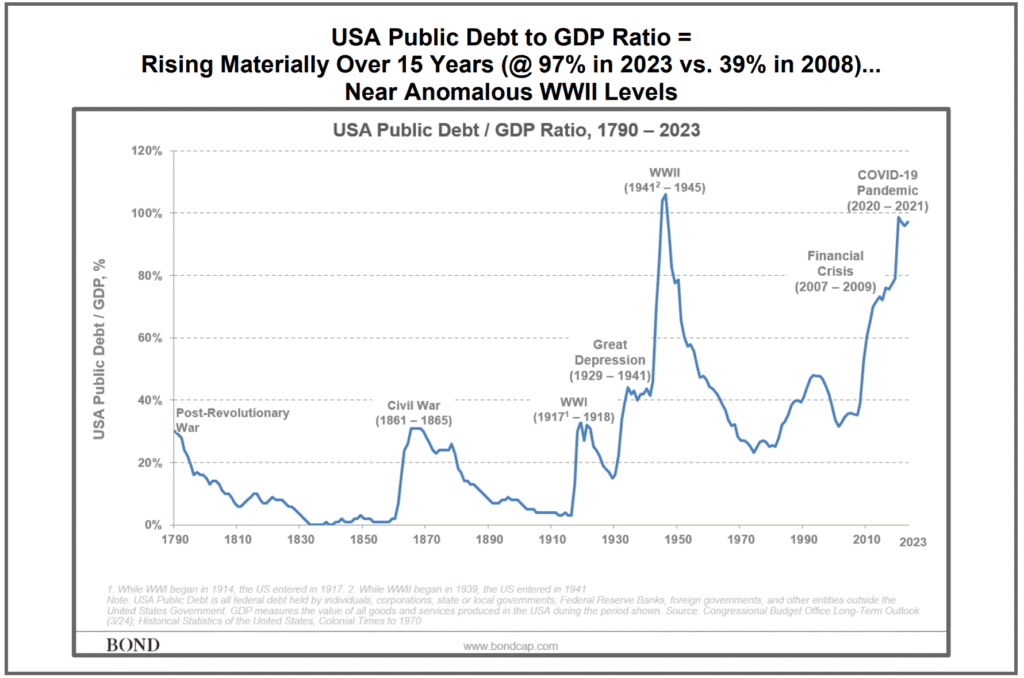
Escalating National Debt: The national debt has surged to levels exceeding historical peaks relative to GDP, projected to continue its upward trajectory [2]. Figure 3
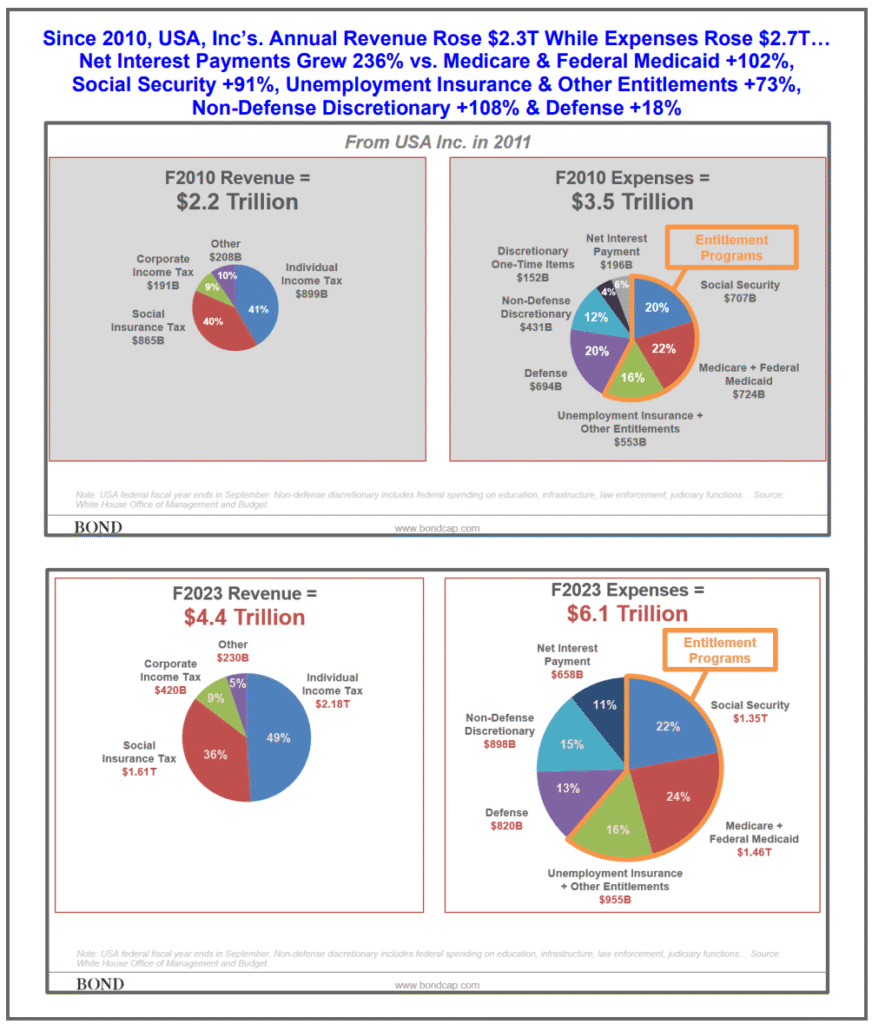
Crowding Out by Interest Payments: A significant and alarming finding is the rapid growth in net interest payments on the debt, which are now consuming an ever-larger portion of the federal budget, crowding out other critical federal investments like infrastructure, education, or defense [3]. Figure 4
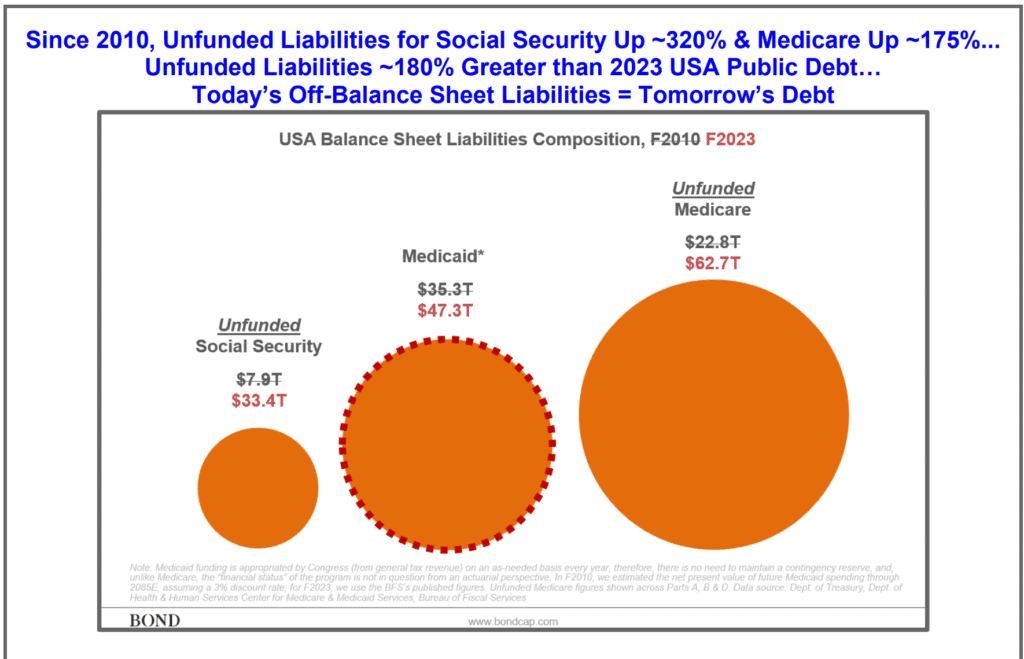
Accelerated Unfunded Liabilities: The “epic” and rising nature of off-balance sheet liabilities, primarily for entitlements like Social Security and Medicare, continues to be a central theme. These commitments amount to multiples of the on-book debt, a warning bell that was already ringing in 2011 but is now blaring louder [1, 4]. Figure 2
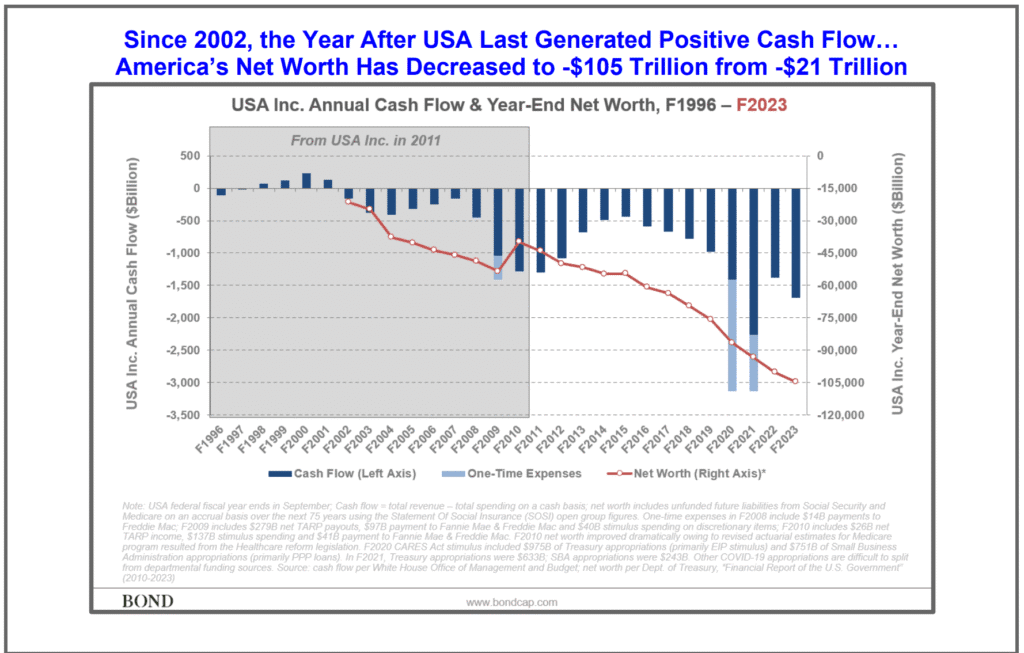
Deteriorating Net Worth: Mirroring a corporate entity, the report likely shows a continued deterioration of USA Inc.’s net worth, implying a diminished financial flexibility to handle future national crises or unexpected economic shocks [1]. Figure 1
Figure 1 Deteriorating Net Worth, USA Inc.Figure 3 Escalating National Debt, USA Inc.
Figure 2 Unfunded Liabilities, USA Inc.Figure 4 Crowding out by interest payments, USA Inc.
Economic Interpretations: A Spectrum of Views
This grim outlook, however, isn’t universally accepted. Mainstream economics broadly encompasses traditional (neoclassical) views and Keynesian economics. Traditional economists often emphasize the importance of balanced budgets, fiscal discipline, and minimal government intervention, fearing that large deficits lead to crowding out of private investment and inflationary pressures. Keynesian economics, while acknowledging the long-term need for fiscal sustainability, emphasizes the role of government spending in stimulating demand during economic downturns, arguing that deficits can be beneficial when the economy is operating below its potential.
Modern Monetary Theory (MMT) represents a more heterodox, almost “post-Keynesian,” perspective. MMT posits that a sovereign government, which issues its own fiat currency, cannot technically “run out of money” and therefore isn’t constrained by debt in the same way a household or business is [6]. From an MMT perspective, the numbers presented in “USA, Inc.” might be seen not as an impending crisis, but rather as an accounting of necessary public spending to achieve societal goals, with inflation being the true constraint, not debt levels. Proponents of MMT would likely argue that government spending creates the very financial assets that fund the debt, and that fears of “crowding out” are overblown for a currency issuer [6].
Support for MMT remains a minority view [10] within the broader economics community. While it has gained increased public discussion, particularly since the 2008 financial crisis and in response to discussions around large-scale public spending, most mainstream economists, including many Keynesians, remain skeptical of its core tenets regarding government debt limits. They typically acknowledge a currency-issuing government’s ability to print money but emphasize the severe inflationary and currency devaluation risks associated with doing so without corresponding real economic output [7].
Conversely, mainstream economists and fiscal conservatives, supported by research from institutions like the Congressional Budget Office (CBO) [2], Brookings Institution [3], and the Peter G. Peterson Foundation [4], see the escalating debt as a significant long-term threat. These analyses consistently project that without policy changes, deficits will remain unsustainably high, leading to increased interest costs that consume a growing share of the federal budget.
The Impact If Nothing Is Done
If the trends highlighted in “USA, Inc. 2025” remain unaddressed, the potential economic ramifications could be severe and far-reaching:
Increased Taxes and/or Reduced Public Services: To service the growing debt, the government would eventually face difficult choices: raise taxes, cut spending on essential public services (like education, infrastructure, or defense), or a combination of both [5, 9].
Crowding Out of Private Investment: As the government borrows more, it competes with the private sector for available capital. This can drive up interest rates for businesses and consumers, making it more expensive for companies to invest and expand, ultimately stifling innovation and economic growth [5].
Stagflation Risk: An uncontrolled increase in the money supply to finance deficits, coupled with supply-side constraints, could lead to stagflation—a damaging combination of stagnant economic growth, high unemployment, and rising inflation [8].
Devaluation of the Dollar: Sustained large deficits and a perceived inability to manage debt could erode international confidence in the U.S. dollar. This could lead to a devaluation of the currency, making imports more expensive, reducing purchasing power for Americans, and potentially undermining the dollar’s status as the world’s reserve currency [9].
Reduced Fiscal Flexibility: A high debt burden leaves the government with less capacity to respond to future crises (e.g., pandemics, natural disasters, economic recessions) without further destabilizing its finances [2, 5].
The Importance of Government Financial Literacy
The underlying message of “USA, Inc.” – both the 2011 and 2025 versions – transcends partisan economics: government financial literacy is paramount. For citizens to make informed decisions and hold their elected officials accountable, a basic understanding of the nation’s financial statements is crucial. Meeker’s report, while crafted with an investor’s precision, is seemingly intended for a broad audience, distilling complex financial data into digestible charts and narratives.
Paradoxically, while the report aims for public comprehension, its detailed nature means it will likely be consumed and debated most rigorously by researchers, academics, economists, and financial industry professionals. Yet, those who will be most profoundly impacted by the underlying fiscal events – average citizens whose future taxes, public services, and economic opportunities are at stake – may be the least likely to fully engage with or understand the nuances of the document. This highlights a critical challenge: translating complex fiscal realities into actionable insights for the very public it seeks to inform. While there maybe disagreement over the impact, the trends and path are troubling and we hope that all Americans make informed choices regarding America’s future.
[7] Mankiw, N. G. (2020). A Skeptic’s Guide to Modern Monetary Theory. NBER Working Paper No. 26650. National Bureau of Economic Research. https://www.nber.org/papers/w26650
Tariffs Are Taxes: Their Impact, History, and Economic Consequences
Tariffs, fundamentally, are taxes imposed by a government on imported goods and services, albeit indirect taxes. They serve multiple purposes: protecting domestic industries from foreign competition, generating revenue for the government, and sometimes acting as leverage in trade negotiations. While tariffs can shield local businesses from overseas competitors, they can result in higher prices for consumers with broader economic effects including inflation.
How Tariffs Affect Consumers and Businesses
When tariffs are applied to imported goods, those costs get added to the cost of goods and generally prices increase to maintain profit margins. All taxes are passed off to either the investor (in the form of lower returns), the employee (in the form of lower wages), the consumer (in the form of higher costs), or the owner (in the form of lower profits). As a result, domestic businesses that rely on imported materials or products face higher production costs. These increased costs are frequently passed on to consumers through higher retail prices. For example, a 25% tariff on imported steel leads to increased costs for automobile manufacturers, appliance producers, and construction firms, all of which depend on steel as a raw material. Consumers then pay more for cars, home appliances, and housing due to these higher input costs.
The effects can also ripple through industries that rely on foreign supply chains. If tariffs are placed on Chinese-made semiconductors, American electronics manufacturers may struggle to maintain competitive pricing, leading to reduced consumer demand, potential job losses, and slower economic growth. Tariffs not only affect direct buyers of imported goods but also the broader economy by influencing business investment decisions and supply chain structures.
Current U.S. Tariff Environment
As of early 2025, the United States has imposed significant tariffs on imports from major trading partners. On February 1, 2025, President Trump announced executive orders imposing a 25% tariff on imports from Canada and Mexico and a 10% tariff on imports from China, effective February 4, 2025. These measures were introduced under the rationale of addressing national security concerns, including unlawful migration and fentanyl flows.
These tariffs are expected to increase federal tax revenue by $142 billion in 2025, translating to an additional tax burden of $1,072 per U.S. household. While this may boost government revenues in the short term, economists predict that these tariffs will raise inflation by 0.7% to 1.2% and reduce GDP growth by 0.6 percentage points. Inflationary pressures stemming from tariffs can further erode consumer purchasing power, creating a cycle of higher costs and reduced economic activity.
Tariffs and Inflation: How Prices Rise
Tariffs contribute to inflation by increasing the cost of imported goods, which then pushes domestic producers to raise their prices. This phenomenon, known as “cost-push inflation,” occurs when businesses pass increased costs onto consumers. If a tariff makes imported aluminum more expensive, U.S.-based beverage companies using aluminum cans must pay more, which results in higher prices for drinks like soda and beer.
Additionally, when consumers face higher prices for goods affected by tariffs, they may demand higher wages to maintain their standard of living. This can lead to a wage-price spiral, where rising wages increase production costs, further driving up prices in a self-reinforcing cycle. Historically, such inflationary cycles have been difficult to break and can require significant monetary policy interventions, such as interest rate hikes by the Federal Reserve.
The History of U.S. Tariffs and Taxation
Historically, tariffs were the primary source of Federal revenue in the United States. Between 1798 and 1913, they accounted for anywhere from 50% to 90% of Federal income. For example, in 1865, excise taxes made up about 63% of Federal revenue, while tariffs contributed 25.4%. So in the not too distant past, and for more than half our countries existence, there were no income taxes and most taxes came from tariffs and excise taxes. (See our article on External Revenue Service)
However, with the introduction of the Federal income tax in 1913, reliance on tariffs as a major revenue source declined. Over the past 70 years, tariffs have rarely contributed more than 2% of total federal revenue. In fiscal year 2024, U.S. Customs and Border Protection collected $77 billion in tariffs, which amounted to only 1.57% of total federal revenue.
Comparing Tariffs to Other Forms of Taxation
Unlike income taxes, which are based on earnings, or sales taxes, which apply broadly to consumer purchases, tariffs target specific goods and services entering the country. This selective nature makes tariffs an indirect tax, meaning consumers may not immediately recognize their effects, even though they ultimately bear the cost through higher prices.
For example, a household that buys imported electronics, furniture, or clothing may notice price increases but may not immediately attribute them to tariffs. In contrast, a direct income tax increase is immediately visible in a worker’s paycheck. Because tariffs often function as a hidden tax, their economic impact can be underestimated by the general public.
Recent Tariff Developments and Economic Outlook
With the resurgence of tariffs under the Trump administration, concerns about their long-term economic impact are growing. Analysts predict that the latest tariff measures could strain U.S.-Canada-Mexico trade relations, with potential retaliatory tariffs from affected countries. If Canada and Mexico impose countermeasures, U.S. exporters—especially in agriculture and manufacturing—could face declining international sales.
Additionally, tariffs on China may disrupt global supply chains, increasing costs for U.S. companies that depend on Chinese manufacturing. Businesses may respond by shifting production to other countries, but such transitions take time and can lead to temporary shortages and price volatility.
Conclusion
While tariffs have historically played an essential role in U.S. economic policy, their modern implications highlight the complexity of global trade. While they can protect domestic industries and generate government revenue, they often lead to higher consumer prices, inflation, and strained trade relations. The recent tariffs imposed in 2025 illustrate the careful balancing act policymakers must navigate to safeguard national interests without disrupting economic stability.
Understanding tariffs in the broader context of taxation history and economic policy helps provide a clearer picture of their long-term effects. As tariffs continue to be used as a tool for trade and economic policy, their impact on consumers, businesses, and inflation will remain a critical issue for policymakers and the public alike.
Trump’s Proposed External Revenue Service: A Return to 1913
Former President Donald Trump has recently floated the idea of replacing the Internal Revenue Service (IRS) with an “External Revenue Service” that would eliminate income taxes and instead rely on tariffs and fees imposed on foreign governments. In essence, replace Income Taxes with fees on Foreign trade shifting the burden of taxes on foreign entities instead of inwardly on US citizens. While this proposal is still in its early stages, lacks concrete details, and may never come to fruition it has sparked discussions about potential benefits and drawbacks of such a dramatic shift in U.S. tax policy.
Historical Context
While many will hear about this proposal and think this is a major, if not radical change it’s important to note that Income taxes are a relatively recent development in U.S. history. The Federal Income tax as we know it today was only established in 1913 with the ratification of the 16th Amendment. Prior to this, the U.S. government primarily relied on tariffs and excise taxes for revenue.
Potential Benefits
Proponents of this proposed system argue that it could offer several advantages:
Simplification: Eliminating income taxes could greatly simplify the tax code, potentially reducing compliance costs for individuals and businesses.
Increased competitiveness: By shifting the tax burden to foreign entities, U.S. businesses might become more competitive in the global market.
Strategic leverage: Tariffs and fees on foreign governments could be used as tools in international negotiations and to address trade imbalances.
Encouraging domestic production: Higher costs on imported goods could incentivize domestic manufacturing and reduce reliance on foreign supply chains.
Domestic Job growth: Tariffs can create barriers protecting domestic industries and promoting job growth and potential repatriation of foreign jobs, companies, and manufacturing.
Strategic positioning: As the US has entered a new cold war with China as a near peer competitor, strategic tariffs could serve as an effective check limiting their Economic growth and ability to build military and economic power against the US.
Trade-offs and Challenges
However, this proposed system also presents significant challenges and potential drawbacks:
Revenue stability: Relying primarily on tariffs and foreign fees could make government revenue more volatile and dependent on international trade dynamics.
Consumer costs: Tariffs are ultimately paid by consumers through higher prices on imported goods. This could lead to increased living costs for many Americans.
International relations: Imposing significant tariffs and fees on foreign governments could strain diplomatic relationships and potentially lead to retaliatory measures.
Economic distortions: Tariffs can create market inefficiencies and lead to suboptimal resource allocation. It could potentially cause massive shifts in supply chains and have major ripples in economies throughout the world with a wide range of impacts, and potentially negative consequences for all participants.
Constitutionality: The legality of completely eliminating income taxes and replacing them with an external revenue system would likely face legal challenges.
Potentially Regressive: US Federal Income taxes are highly Progressive with 89% of taxes being paid by the Top 25% of tax payers. Shifting to tariffs for revenue maybe inflationary to goods. While it is likely the higher income individuals consume more, it may be that staples required by all consumers may disproportionately impact those most in need.
Feasibility: While this may sound good on paper, the IRS collects roughly $5 trillion in income tax revenue annually – it may not be economically feasible or possible to collect this from external entities
Tariffs as a Form of Taxation
It’s crucial to understand that tariffs are indeed a form of taxation. While they are imposed on foreign goods and not seen as a direct cost to the consumer, the cost is typically passed on to domestic consumers through higher costs. This means that under the proposed system, Americans would still be paying taxes, albeit indirectly through higher prices on imported goods.
Strategic Considerations
Despite the economic drawbacks, some argue that tariffs can serve strategic purposes beyond revenue generation. In particular, tariffs on goods from near-peer competitors like China could be used as leverage in geopolitical negotiations or to protect sensitive industries as well as check a rising global power who we are currently in a cold conflict with and may potentially be in a hot conflict in the future. However, this approach carries risks of escalating trade tensions and potential economic retaliation.
Conclusion
Trump’s proposed External Revenue Service represents a old, but radical departure from the current U.S. tax system. While it offers potential benefits in terms of simplification and strategic leverage, it also presents significant challenges and economic risks. As with any major policy shift, careful consideration of both short-term and long-term consequences is essential.
It’s important to emphasize that this proposal is still in its early stages and lacks specific details. The feasibility, implementation, and potential impacts of such a system would require extensive study and debate. Furthermore, any major overhaul of the U.S. tax system would likely face significant political and legal hurdles.
As discussions around this proposal continue, it will be crucial to consider not only the economic implications but also the broader impacts on international relations, domestic policy, and the overall well-being of American citizens. Ultimately, any changes to the tax system should aim to balance revenue needs, economic growth, fairness, and strategic interests in an increasingly complex global landscape.
Trump’s Tax Plan: Proposals and Potential Outcomes
As the United States transitions from the 2024 election to what the expectations of the incoming administration will do, former President Donald Trump’s tax plan proposals, including the Department of Government Efficiency (DoGE), have garnered significant attention. While these may have been statements during the Campaign or since by President Elect Trump, DoGE, Elon Musk, Vivek Ramaswamy, or other members of the incoming administration what is expected to be part of the incoming administration, many of these proposals are speculative and yet to be formalized as the plan of record, and it is likely even if they do make it to plan they will have significant hurdles in execution. However, with both houses of congress favoring the new administration these proposals, if implemented, could have far-reaching effects on the American economy, individual taxpayers, and businesses. While no one has a crystal ball to know what will be enacted this article aims to provide a comprehensive overview of the most up to date information on Trump’s proposed tax changes and there potential impacts on various economic factors.
Key Components of Trump’s Tax Plan
Individual Tax Reforms
1. Extension of the 2017 Tax Cuts and Jobs Act (TCJA)
What is it?
Keeping current tax cuts in place.
One of the central pillars of Trump’s tax plan is the permanent extension of the individual and estate tax provisions from the 2017 TCJA, which are set to expire at the end of 2025. This extension would maintain the current tax brackets and rates, as well as the increased standard deduction and child tax credit.
Key Points:
Permanently extend individual and estate tax provisions
Maintain current tax brackets, rates, deductions
Potential Outcomes:
Maintaining lower tax rates could provide continued tax relief for many Americans.
The extension could contribute to increased consumer spending and economic growth.
Could lead to a reduction in Federal revenue and an increase in budget deficit if not offset by growth.
The TCJA’s extension could provide stability in tax planning for individuals and businesses. However, the long-term fiscal implications of making these cuts permanent are a subject of debate among economists and policymakers.
2. Tax Exemptions for Specific Income Types
What is it?
Making certain types of income tax-free
Trump has proposed exempting overtime pay, tip income, and Social Security benefits from taxation .
Key Points:
Exempt overtime pay, tip income, and Social Security benefits
Potential Outcomes:
These exemptions could provide tax relief for certain workers, particularly in the service industry and for retirees.
These exemptions will reduce Federal revenue that may not be offset by growth and could potentially complicate the tax code.
These exemptions could provide targeted relief to specific groups of workers, in particular low wage earners, and retirees. However, they may also introduce new complexities into the tax system and reduce overall tax revenue.
3. Child Tax Credit Expansion
What is it?
Bigger tax break for parents
There are indications that Trump is considering expanding the child tax credit to $5,000 per child, a significant increase from the current $2,000.
Key Points:
Increase to $5,000 per child from $2,000
Potential Outcomes:
This expansion could provide substantial financial relief for families with children.
It might encourage long term population growth and support working parents.
It would represent a significant cost to the federal budget.
This proposal could significantly benefit families with children, potentially reducing child poverty rates. However, the fiscal impact of such a large increase in the credit would be substantial.
4. Eliminate Overseas Income Taxation
What is it?
No U.S. taxes for Americans living abroad.
Trump has stated that he would eliminate income taxes on Americans living abroad. During his 2024 presidential campaign, he pledged to end double taxation of overseas Americans . America is the only country that taxes foreign income made abroad.
Key Points:
End income taxes on Americans living abroad
Potential Outcomes:
May encourage some migration, especially for U.S. retirees.
Would eliminate additional sources of US Income.
This proposal would align U.S. tax policy more closely with that of other countries, potentially making it more attractive for Americans to work or retire abroad.
5. Tax-Free Universal Savings Accounts (USAs)
What is it?
New savings accounts with tax benefits.
Trump proposes introducing new savings accounts aimed at increasing and simplify saving for individuals.
Key Points:
Tax-Free Growth: Contributions would grow without being taxed.
Flexible Withdrawals: Penalty-free withdrawals would be allowed at any time.
Annual Contribution Limits: Proposed limits around $10,000 per year .
Simplicity: Aimed at reducing complexity associated with savings accounts.
Encouraging Savings: USAs aim to boost personal savings rates in America.
Potential Outcomes:
Increased savings rates and wealth accumulation among Americans.
Reduced dependence on government programs through enhanced financial security.
6. Lowering Capital Gains and Indexing for Inflation
What is it?
Reduced taxes on investment profits.
Trump has proposed changes to capital gains taxes as part of his campaign.
Key Points:
Lowering Top Rate: Reducing long-term capital gains from 20% to 15%.
Indexing for Inflation: Adjusting purchase prices for inflation when calculating gains.
Possible Outcomes:
More attractive investment environment
Potential economic stimulation
Reduced Federal revenue from capital gains
Reduction in taxation on Wealthier segment of population
These changes aim to make investing more attractive while potentially stimulating economic activity by encouraging more investment. Many consider Capital Gains as a second taxation on money as the initial income to make the investment was already taxed. A reduction in Capital Gains is often seen as a gift to the wealthy as this tax is mostly on the higher end of the income tax bracket and is highly progressive.
Business Tax Reforms
7. Corporate Tax Rate Reduction
What is it?
Lower taxes for businesses.
Trump has proposed lowering the corporate tax rate from the current 21% to 20% or even 15% for companies that produce goods in the United States .
Key Points:
Lower rate Corporate Tax Rate to 20% or 15% for U.S. producers
Potential Outcomes:
A lower corporate tax rate could incentivize businesses to invest and expand operations within the U.S.
It might attract foreign investment and potentially lead to job creation.
Reductions in corporate taxes could lead to some combination of higher profits, lower consumer costs, higher employee wages, or higher investor returns.
Could lead to a reduction in Federal revenue and an increase in budget deficit if not offset by growth.
This proposal aims to enhance the competitiveness of U.S. businesses globally.
8. Repeal of Green Energy Tax Credits
What is it?
Removing tax incentives for clean energy.
Trump has proposed eliminating most of the clean-energy tax credits for businesses and individuals that were enacted under the 2022 Inflation Reduction Act .
Key Points:
Eliminate credits from 2022 Inflation Reduction Act
End Clean Energy subsidies
Potential Outcomes:
This could potentially slow the adoption of renewable energy technology, and impact the companies in this space.
It might reduce government spending in the short term.
Changes could hinder efforts to combat climate change and potentially affect job markets in the green energy sector.
This proposal reflects a shift in energy policy priorities. While it could reduce government spending in the short term, it may have long-term implications for the U.S. energy sector and environmental goals.
9. E Commerce Sales Tax Standardization
What is it?
Unified online sales tax rules.
Tax rates are different across state and local municipalities for online sales. This would create a National framework for online sales tax and simplify multi-state compliance for businesses.
Key Points:
Creates National framework for online sales tax
Simplify multi-state compliance for businesses.
Potential Outcomes:
Potentially increases state and local tax revenue.
Reduces compliance burden for businesses lowering their costs.
Trade, International Tax & Tariffs
10. Universal Import Tariffs
What is it?
Taxes on imported goods
An aspect of Trump’s plan is the proposal to impose a universal baseline tariff of 10% to 20% on all U.S. imports across the board, with a higher 60% tariff on goods imported from China . Whether this is a negotiating tactic to gain leverage over trading partners or a blanket statement is yet to be seen.
Key Points:
10-20% Tariff baseline on all imports
60% Tariff on Chinese goods
Potential Outcomes:
Increased tariffs could potentially protect domestic industries and boost American jobs and manufacturing.
Negotiating leverage that could lead to more fair trade deals with foreign partners.
May lead to higher consumer prices, inflation, and potential retaliation from trading partners which in turn could impact US growth.
The Peterson Institute for International Economics estimates that these tariffs could add $1,700 a year in additional costs for a typical middle-class household .
While tariffs could protect certain domestic industries, they may also lead to higher prices for consumers and potential trade conflicts. The impact on global supply chains and international relations could be significant, and is likely to be challenged by a number of countries and the WTO.
11. Enhanced Border Adjustment Tax (BAT)
What is it?
Tax imports, not exports
Essentially a value added tax (VAT) on imported goods requiring tax code changes, and border enforcement changes to account for the import of goods. Designed to protect domestic production of goods.
Key Points:
Taxes imports while exempting exports.
Possible Outcomes:
Protects domestic production.
Risk of consumer price increases and trade retaliation.
Higher compliance costs for businesses
12. Revocation of Global Tax Agreements
What is it?
Leaving international tax deals
In his first stint as President, Trump has show that he is willing to rock the apple cart and toss out new deals. Whether this is saber rattling to leverage new deals, or there is significant changes to existing trade deals is yet to be seen.
Key Points:
Exit or renegotiate OECD tax frameworks.
Exit or renegotiate individual or existing international trade agreements with various nations.
Shifts from Bi Lateral International tax focus to Sovereign tax focus.
Possible Outcomes:
Greater U.S. control of tax policy.
Potentially more favorable terms for US firms, and trade
Potentially inflationary if retaliatory policies put in place by foreign partners
A common theme under Trump’s proposal is the potential to protect domestic markets and products, and move to more Sovereign trade and tax policies. The net effect is yet to be determined, but is likely to have some inflationary effect, while simultaneously potentially improving existing deals.
Tax System Reform
13. Simplified Tax Filing
What is it?
Easier tax returns
Trump has emphasized simplifying the Federal tax code during his campaign. DOGE has discussed cutting regulations, the number of deductions, and even a flat tax.
Key Points:
Simplified Filing: Trump has proposed making tax filing easier by allowing more taxpayers to file their returns on a single form.
Reducing Deductions/Credits: By reducing deductions and credits, he aims for a less complex code.
Streamlining Business Taxes: Proposals include lowering corporate rates while simplifying business deductions .
Possible Outcomes:
Easier compliance for individuals and businesses.
Reduced costs filing taxes.
Improved tax system transparency
Many administrations have tried to simplify taxes, including making compliance and filing easier and free. While critics may argue that proposals like a flat tax will reduce the burden on the rich, others will call out that such proposals will have a minimum for those with large deductions, including from the ultra wealthy who may have enough deductions to pay zero taxes. Everyone consumer will cheer easier tax filing, and lower costs.
14. Abolishing the IRS for a National Sales Tax
What is it?
Replace income tax with sales tax
This would eliminate the IRS as an organization, and the need to collect income taxes altogether. It would be replaced by a Federal Sales Tax. Some will argue that sales taxes are regressive, so replacing the income tax with a sales tax will be more regressive for those in the lower income bracket. The counter is that the income tax system is already highly progressive and it is likely that higher income segments will continue to consume more and therefore pay higher taxes. This has yet to be determined the net effect of such a proposal.
Key Points:
Replace income tax with a flat-rate sales tax
Simplifies tax system.
Eliminates filing income taxes, and specific deductions
Possible Outcomes:
Potentially regressive impact on low-income households.
Eliminates the zero income tax filers that have offset all their income tax liabilities with write offs
Productivity boosts eliminating income tax filing
Possible implementation challenges.
While a Flat Tax, or “Fair Tax” has been discussed as a simplified income tax proposal for years, this would completely replace the byzantine set of tax code, deductions, and loopholes with a consumption based flat sales tax. It would shift the focus from income to consumption.
15. Revisiting SALT Deduction Limits
What is it?
Changing state and local tax deductions
In his first term this was considered either one of the most brilliant or evil political tax policies of his administration. In effect, wealthy states with high property prices were capped on mortgage deductions for high real estate areas. This in essence became a major change in wealthy coastal cities, and in essence a major tax increase for democratic “blue” states. This would potentially be a reversion to the pre Tax Cut and Jobs Act norm, or something closer.
Key Points:
Adjust or remove $10,000 cap on state and local tax (SALT) deductions.
Eliminate or reduce the focus on high-tax states
Possible Outcomes:
Relief for taxpayers in high-tax states.
Benefits wealthier households disproportionately.
Potential Federal revenue loss, but relief on State and Local Budgets constraint to raise taxes
Critics have pointed out that this tax targeted the wealthy, and blue states, and was in essence a double taxation since many states and local municipalities already have, substantial in some cases, property taxes. Some have pointed to this as supporting the migration from high tax (“Blue”) states to lower tax (“Red”) states. This would move to return closer to pre TCJA tax policies.
16. Revisiting Carried Interest Loophole
What is it?
Changing tax rules for fund managers
Most people will never deal with this, but Hedge Fund and other Investment Managers have “Carried Interest”, meaning they take a percentage of any market gains in the portfolio of investments they manage for customers. While this is part of their “pay, currently it is treated as an investment gain which is taxed as a Capital Gain. This means that they can pay a Capital Gains tax rate of say 20% versus what someone in that tax bracket might pay if it was taxed as ordinary income at say 37%.
Key Points:
Modify or maintain tax treatment of carried interest.
Controversial among policymakers. Technical, it is a capital gain on an investment, but it is also a form of pay/income to the fund managers.
Possible Outcomes:
Potential for small Federal tax gains
Potential benefits for higher tax rates on private equity and hedge fund managers.
This loophole has been criticized for benefiting wealthy investors, escaping their fair share of taxes on an income stream that most tax payers have no access to, and tends to hit the very top end of individual wealth.
17. “Made in America” Tax Credit
What is it?
Tax breaks for U.S. manufacturing
This would incentivize industry to build and source from the United States, potentially producing jobs and higher economic output, and protecting American industries. It could potentially also be inflationary if insourcing costs minus tax credits exceed the cost basis of global competitors.
Key Points:
Tax credits for goods entirely manufactured in the U.S.
Aligns with “America First” agenda to produce more goods and services in America
Possible Outcomes:
Encourages domestic manufacturing.
Risk of global trade conflicts.
Potentially inflationary costs
Another America first proposal that can have both positive domestic production, jobs, and output, as well as negative trade and inflationary outcomes.
18. Full Expensing for Business Investments
What is it?
Immediate tax write-offs for business purchases
Businesses can already write of many business expenses, but this would accelerate the write off. Details are sparse, but this may allow businesses to expand, purchase capital equipment quicker by realizing the economic benefits up front versus say spread over many years.
Key Points:
Permanent or expanded full deduction for capital expenditures.
Part of pro-business policies.
Possible Outcomes:
Increased business investments.
Potential acceleration of capital projects, and equipment and associated economic growth.
Reduction in Federal revenue in the short term, but evens out of the term of investment.
This is a very pro business stance that could spur significant growth and acceleration of capital investments. There would likely be short term Federal revenue fall due to proposals, but those are just typically brought forward on write offs business likely would have received over lifetime of capital expense so it just brings those forward.
19. Broadening Opportunity Zones
What is it?
Expanding tax breaks for investing in poor areas
The government for years has attempted to create “Opportunity zones” where additional tax incentives are available to spur additional investment into typically poor and under invested areas. Trump’s proposals in this area maybe an expansion of such programs.
Key Points:
Expand areas eligible for Opportunity Zone tax incentives.
Attracts investment in underserved areas.
Possible Outcomes:
Increased development in targeted regions.
Risk of gentrification and displacement.
As with all investments, they may improve the areas of investment, but not always of the lives of the people in those areas. In some cases, gentrification or urban renewal can be thought of as helpful, but in some cases it displaces the most needy making it harder or impossible for them to continue to support themselves in the improved areas. However, in general urban renewal is thought of positively, but to critics it has negative effects that disproportionately impact the poor.
20. Tax Incentives for Cryptocurrency Investments
What is it?
Tax breaks for digital currency investments
The details are light but it is clear that the income administration support Crypto currency, believe that it should be well defined and have a lower regulatory touch, and they would like the innovation and assets in the Crypto currency space to occur in the US.
Key Points:
Favorable tax treatment for digital assets/crypto.
Encourage innovation in blockchain technologies.
Regulatory support for digital assets.
Possible Outcomes:
Boost to the digital economy.
Support innovation and transition from Traditional Financial firms (TradFi) to Decentralized Finance (DeFi).
Tax evasion and regulatory concerns.
There is a lot wrapped up into crypto currencies, including the development of a US Central Bank Digital Currency (CBDC), the transition to more modern banking and financial mechanisms, as well as the impact on how the US regulates, manages, monitors, and asserts control over currency and capital including the US long term position as the Worlds Reserve Currency. We don’t know much, but that this administration seems willing to put their toes into the deep end of the pool, whether they jump in or not is to be seen.
Retirement and Savings
21. Retirement Tax Reforms
What is it?
Changes to retirement account rules
These are generally seen as positive helping individuals save more, and potentially earlier. There is likely to be some impact on Federal Revenues, but this is generally seen to help individuals save more of the money they earned to grow and develop over their working careers.
Key Points:
Higher contribution limits for retirement accounts.
Adjust Required Minimum Distribution (RMD) rules for retirees.
Possible Outcomes:
Increased retirement savings.
Longer term stability with more individuals reaching financial freedom and retirement stability.
Some reduction in federal tax revenue.
22. Enhanced Tax-Free Savings Accounts (USAs)
What is it?
New flexible savings accounts
This proposal could enhance savings, and allow folks to develop savings quicker, and minimize the effects of unplanned expenses for the most economically challenged. While critics will say this will disproportionately help wealthier individuals as they have the most money and hence would accrue therefore most of the benefits, this could greatly impact the savings and flexibility of those who are most in danger of severe financial consequences.
Key Points:
Tax Free growth on savings contributions
Flexibility for withdrawals, could be taken penalty free at anytime
Simplified contribution rules, up to $10,000 a year.
Possible Outcomes:
Encourages and promotes savings.
Reduced dependency on government aid.
Potential Federal Revenue impact and trade-offs.
23. Social Security Payroll Tax Deferrals or Cuts
What is it?
Temporary reduction in Social Security taxes
Details are light, but Trump implemented executive orders to defer some Payroll taxes during the COVID pandemic in 2020. He has discussed and may implement some form of Social Security payroll adjustment in the new administration.
Key Points:
Extend payroll tax holidays.
Reduce or eliminate payroll taxes temporarily.
Possible Outcomes:
Short-term relief for workers.
Concerns about Social Security fund sustainability.
Will this be a short term gimmick that will hurt in the long term, or will there be material changes that benefit the worker financially, too early to tell.
Summary
President Trump’s 2024 Tax Plan proposals represent a wide ranging set of policies with far-reaching economic consequences. In a challenging macro environment with Wars in Europe, growing large power tensions with China, large debts, growing deficits, and challenges to the implementation of his proposals make it difficult to predict how they may all play out. While much of the language and proposals maybe bravado and building negotiating leverage, other areas maybe more strategic long term plays against major global rivals including tariffs on China, the worlds manufacturing hub, are likely to be inflationary. While supporters argue these changes will stimulate economic growth to offset expenses, provide relief, and check geopolitical rivals; critics raise concerns about deficits, inflation, and trade wars.
Actual impacts will depend on implementation specifics & economic conditions at enactment including the incoming administrations highly publicized statements from the proposed Department of Government Efficiency (DOGE) to cut Federal spending by $2 trillion. The administration will need to carefully weigh benefits and risks against the long-term consequences. Ultimately balancing competing priorities—growth stimulation vs fiscal responsibility vs geopolitical positioning —will be crucial as discussions progress regarding these significant policy changes affecting the American economy & future stability. At the Tax Project we hope that the new administration will be transparent and continue to make the information available to allow the public to evaluate these changes with unbiased data.
Tax Project Institute is a fiscally sponsored project of MarinLink, a California non-profit corporation exempt from federal tax under section 501(c)(3) of the Internal Revenue Service #20-0879422.